
How to Edit a Viral Morning Routine Vlog like Vanessa Faga
An editing breakdown of Vanessa Faga's aesthetic morning-routine TikTok — the flash-preview hook, hard cuts between rooms, beat-synced actions, and timestamp overlays — and how to run the same recipe on your own routine footage.

The first thing Vanessa Faga's morning-routine TikTok does is spoil itself. In the opening second and a half, a staccato montage runs through nearly every scene the video contains — the bed being made, the skincare, the matcha being poured, the finished manicure — and then the video starts over and shows each one in full. That sounds like a way to kill suspense. Watched as an edit, it is the opposite: by the time the routine actually begins, you have already been shown what the full versions of those clips look like, and the rest of the video is the edit paying that promise off.
That open is the most copyable thing about the video, and it is copyable because it is structure, not content. This article breaks one edit — the "friday morning" routine Faga posted on TikTok — into the observable decisions that build it: the flash-preview hook, the hard cuts between rooms, the beat-synced actions, the timestamp text layer, and the high-key pastel treatment. Then it shows how to run that recipe on your own routine footage, because the recipe is what transfers and the content is not.
A scope note before the breakdown, because every claim below depends on it. This analysis is based on the one video examined for this piece, watched on TikTok and annotated frame by frame when the article was first written in April 2026. The engagement numbers are a snapshot from that same month: roughly 209.8K views, 28.4K likes, around 200 comments, and about 2K saves, on an account then showing around 1.6 million followers. Those numbers will have moved by the time you read this, and one video is one data point — what follows is a breakdown of how this edit is constructed, not a claim about how Faga edits everything she posts. If you are newer to the format itself, the routine vlog and its follow-me-around structure are defined in what a vlog is; this piece stays on the editing decisions.
The Hook: A Montage That Spoils the Video
The hook runs from roughly 00:00 to 00:01, and it is dense. Sub-second flashes cycle through the video's key moments — bed-making, skincare, the matcha pour, the manicure — before the edit settles into the routine's actual beginning. None of the flashes is a full shot; each lasts just long enough to register an image and a color, which is what makes the sequence feel like flicking through a lookbook rather than watching clips.
Why open this way? The honest answer is interpretation, not measurement, and it should be read as one: the montage works like a visual menu. A viewer who likes the look of the matcha clip now knows a full version of it exists later in the video, so the hook converts "should I keep watching?" into "I am waiting for the part I already saw." The save behavior in the April 2026 snapshot — about two thousand saves against roughly two hundred comments — is at least consistent with people bookmarking a routine they intend to come back to, though a single video's counts cannot prove what any viewer intended.
The mechanics of the device, on your own footage, are simple. Pull one strong moment from each of four to six scenes that appear later in your edit, cut them together in under two seconds, and land on your video's true first scene. The only part that matters is that the flashes preview your video's own payoff moments — the hook holds attention because it promises shots the viewer will actually receive.
The Cut Logic: Hard Jumps Between Rooms
Between locations, the video uses straight cuts and nothing else. The routine moves bedroom to bathroom to kitchen, and each jump is a hard cut with no transition effect, no whip pan, no wipe. Inside each scene the camera does not move at all: it sits on a fixed tripod framing, closer to security-camera stillness than to handheld vlogging, and the stillness pushes all of the motion into the actions themselves — hands, water, steam, fabric.
That is a deliberate trade, and it is visible in what the edit spends its frames on. Because no time is spent on transitions or camera movement, every kept frame shows an action completing: the bed going from unmade to made, the matcha going from powder to pour. The product shots follow the same rule — static macro close-ups of items from brands including Kérastase, Caudalie, and Clarins, framed long enough to read the label. The likely logic, again an interpretation: hard cuts between rooms let a location change cost exactly one frame, which is how a full morning — hair, shower, skincare, matcha, breakfast, manicure — fits into a short-form runtime without ever feeling rushed.
Sound: Ambient Noise Laid on a Beat
There is no dialogue anywhere in the video. The vocal track is entirely ambient and diegetic — liquid pouring, a whisk clinking against a bowl, mist spraying — and it sits on top of a music bed rather than underneath a voiceover. The music itself is Zara Larsson's "Lush Life," released June 5, 2015, which by 2026 had circled back into the TikTok trend cycle: posts using the sound had passed fourteen billion views on the platform, and the song reached a new Billboard Hot 100 peak roughly a decade after its release. Its bright, mid-tempo pop bounce is doing the "productive but unhurried" work that a slower or harder track would not.
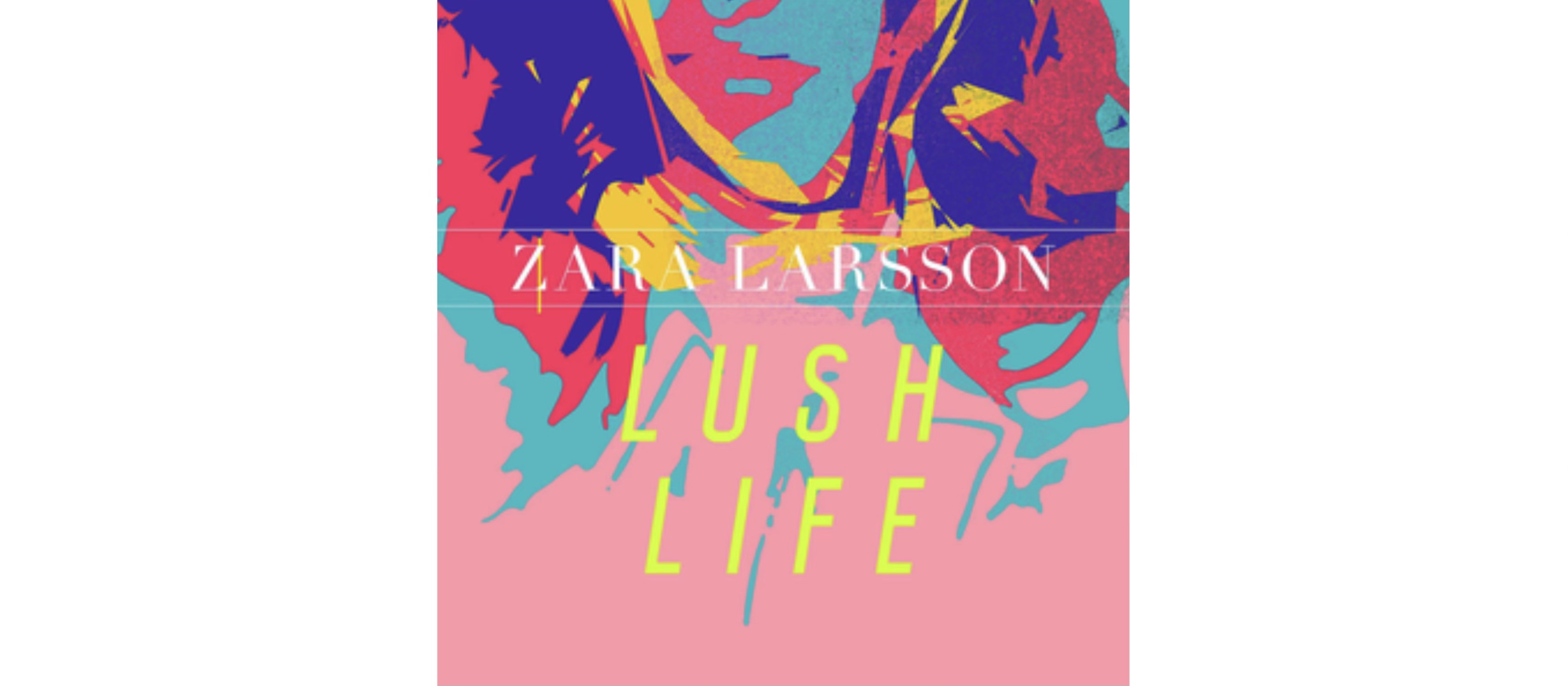
The sync behavior is the part worth stealing. In the video examined here, the visible action cuts — the alarm being silenced, the matcha whisk, the first skincare application — land on the snare or the downbeat rather than between beats. The beat supplies forward motion, the ambient sounds supply texture, and the two together are what the video has instead of a narrator. You do not need this specific track to reproduce that; you need a tempo map of whatever song you are using, and a list of your routine's most filmable actions, cut to land on the accents instead of beside them.
Light, Color, and the Product Frame
The grading is high-key and slightly overexposed, reading as natural morning window light. The palette stays inside a narrow band the whole way through — blush pink, cream white, and the sage green the matcha itself supplies — so scene changes never change the color mood. On top of that frame, the product close-ups do double duty: they are aesthetic beats in the montage rhythm, and they are readable labels, which is where the shopping-intent reading of this format comes from. Both halves are observable in the video; what transfers to your edit is the framing discipline — one static, well-lit macro per product — and not the specific product shelf, which belongs to Faga's life and sponsorship relationships, not to the format.
The Text Layer: Timestamps as a Progress Bar
The on-screen text is a system, not decoration. A white, sans-serif, all-lowercase header — "friday morning" — sets the casual register and labels the video before the first action lands. From there, timestamps appear in sequence (8:00 AM, 8:23 AM, and later stamps) as the routine advances. The lowercase styling and minimal placement keep the text from competing with the visuals; the timestamps do something structural instead, working like a progress bar. A viewer who sees 8:00 AM knows the morning has an arc with an end, which gives the edit a completion signal — the reason to stay is to see what the final stamp says. For your own version, the recipe is the same at any resolution: one lowercase header naming the day, then honest timestamps marking real progression.
Running the Recipe on Your Own Footage
Assembled from the breakdown above, the recipe is five decisions you can make before you open any editing tool:
- Open with a sub-two-second montage of your own best moments, then start the routine for real.
- Hard-cut between locations; keep the camera locked and still inside each scene.
- Cut your most filmable actions to land on the track's snare or downbeat, and let ambient sound carry the texture.
- Grade high-key in one narrow palette, and give each product one static macro shot.
- Lay a lowercase day header plus sequential timestamps as the progress bar.
The boundary matters as much as the list. Learn the recipe, not the content: Faga's routine, her product shelf, her apartment, and her footage are hers, and none of them are what made the edit work — the structure did. Rebuilding the structure with your own morning, your own products, and your own camera roll is the transferable skill; re-recording her video shot for shot is copying, and it usually reads as copying too.
Two adjacent pieces pick up where this one ends. If the variant you want is the extreme early-start routine — the pre-dawn-to-sunrise timestamp narrative — that format is broken down separately in the 4AM morning routine vlog analysis. And if what you want is the general method for extracting pacing, cut logic, and caption behavior from any reference clip — not just this format — that is how to copy a video editing style from a reference.
When it comes to actually making the edit, routine footage is mostly silent action rather than talking-head, which changes the workflow; editing a vlog with AI covers that path end to end. One disclosure for that step: Sparki is the product we build, and its Copy Style capability is built around exactly the boundary above — it analyzes how a reference edit is constructed and applies that recipe to footage you already shot, without copying the reference's content. It drafts; you review and direct, and it works only with your own material.
What stands out once the breakdown is finished is how little of this edit is "editing" in the effects sense. There are no transitions, no camera movement, no voiceover, no color tricks beyond consistency — the whole thing is selection, ordering, sync, and text. That is good news for anyone with a phone full of routine footage: the expensive-looking part of this format is the cheapest part to copy, and it is the part that was never Faga's to begin with.
https://sparki.io/blog/how-to-edit-viral-morning-routine-vanessa-faga