


Parent & Family Creators
Any creator filming their child's daily routine, meals or activities can use the caption-led narrative structure to turn raw footage into an emotionally resonant Short — no voiceover, no ring light required.
Soft morning light, tight food close-ups and unhurried caption-driven pacing — break down the recipe behind her most-cloned Shorts and apply it to your own footage.
Or start from one of Jenn Im's own videos
166.8K
Views On This Short
YouTube Shorts
Platform
~45 sec
Avg Length
Food / Motherhood
Primary Format
YouTube Shorts · 45 seconds
166,817
Views
2,498
Likes
24
Comments
The clip earns its watch-time in the first caption — "Good morning. Let's make my son some breakfast." — a single sentence that turns a food montage into a story with a protagonist and a goal. The viewer is not watching a recipe; they are watching a mother's morning. That narrative frame keeps retention high because the audience is emotionally invested, not just visually entertained.
The second driver is aspirational accessibility. Every shot is warm, clean and domestic — a real kitchen, real food, real toddler portions — but lit and framed so carefully that the ordinariness reads as beautiful. The gap between "I could do this" and "I wish my mornings looked like this" is exactly where the most-shared lifestyle content lives.
The clip follows a single-day meal arc compressed into under a minute, moving from morning to midday to evening with enough visual variety between courses that the viewer feels time passing without any caption timestamps. For your own footage, use a reference to guide the cut rhythm, or build the meal sequence with a food vlog workflow.
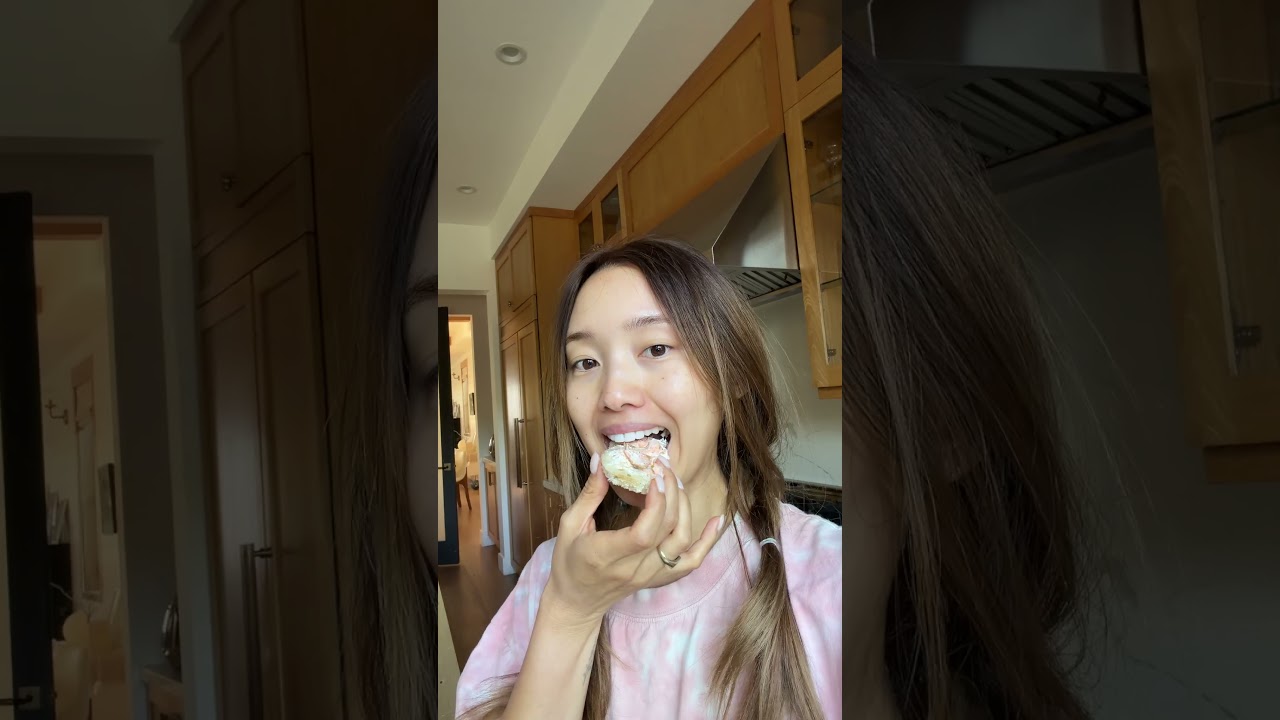
A warm, soft-lit kitchen frame opens the video. The caption "Good morning. Let's make my son some breakfast." appears before any food is shown, establishing a maternal narrator voice that pulls the viewer in.
The camera is already close — tight on a bowl, a spoon, a hand — so the first cut lands on texture rather than a wide establishing shot.
Editing technique: Caption-first hook, close-open structure
Individual ingredients appear in a quick sequence of macro shots — the color contrast between ingredients and the background is maximized by the warm color grade.
Each shot holds for roughly one second, giving the viewer time to register the food detail before the cut. The pace feels intentional, not rushed.
Editing technique: One-second macro cut rhythm
A brief caption bridge — readable in under two seconds — marks the meal transition without needing a voiceover. The edit jumps directly into the next course with the same tight-food-first logic.
The lighting stays warm and consistent across the meal change, so the time skip reads through caption alone, not through a visual gear shift.
Editing technique: Caption-only time bridge, lighting continuity
The final meal is the most composed shot of the clip — the plating is cleanest, the framing is slightly wider to show the full table context.
No recap, no CTA card — the video ends on the food, letting the visual satisfaction close the loop without over-explaining.
Editing technique: Clean plating close, no-CTA ending
Six repeatable rules define the look, including warm domestic light, food preparation details and conversational moments that keep the lifestyle footage personal.
The story is told in text, not voiceover. Every scene change is cued by a short readable caption that tells the viewer what to feel, not just what they are looking at. This keeps the video watchable on mute.
Shadows lift to a golden tone, highlights stay creamy rather than blown. The grade makes a standard kitchen counter read like a lifestyle editorial — achievable with a single LUT or a warm-shifted white balance at the time of capture.
The camera opens on the closest possible frame of the food — texture, steam, color — and only pulls back if the meal requires spatial context. Viewers register quality before scale.
Food shots hold for roughly one second each: long enough to register the detail, short enough to keep the pace moving. The rhythm feels leisurely but the clip still covers three meals in under a minute.
Captions use first-person, present-tense language that positions the creator as a loving parent, not a nutritionist. "Let's make my son some breakfast" earns more trust than "high-protein toddler meal" ever could.
No branded kitchenware, no restaurant plating — the setting is recognizably home. The beauty comes from composition and light, not from expensive props, which makes the style transferable to any creator's kitchen.
Compare other Shorts from the channel to see how warm domestic light, food preparation and family moments repeat across different lifestyle stories.
The warm domestic food recipe transfers to any creator who films what they cook, grow or make at home.
Any creator filming their child's daily routine, meals or activities can use the caption-led narrative structure to turn raw footage into an emotionally resonant Short — no voiceover, no ring light required.
The macro-first composition and one-second cut cadence turn a standard cooking video into an aesthetic food Short. The warm grade makes budget ingredients look editorial.
Morning routine, healthy eating and home-living creators can borrow the maternal voice register and domestic aesthetic to make their day-in-the-life content feel warm and intentional rather than aspirationally distant.
The macro-first ingredient shots, caption-led story and warm domestic grade suit content that follows produce from a garden or market into a finished family meal.
Compare how other creators pace, frame and finish their videos.
Keep The Story Personal, Not Unstructured
Use a reference edit to find a clearer rhythm for your own lifestyle footage while keeping your voice and point of view intact.
Explore Copy Style