
One Piece From Start To Finish
Show the brief or first mark, the point where the piece changes and the finished work. Compress repeated strokes, but hold on decisions a viewer would otherwise miss.
A finished piece shows the result, not why you changed the sketch or painted over the first layer. Give viewers a way through the making without turning every hour at the desk into a timelapse.
See how artists connect preparation, experiments, revisions and a finished work in a studio story.
Build the edit around a change in the work, not around a fixed number of hours filmed in the studio.
Show the brief or first mark, the point where the piece changes and the finished work. Compress repeated strokes, but hold on decisions a viewer would otherwise miss.
A few pages can reveal an idea taking shape. Keep the rejected version and the revision when they explain the result; speed through repetitive fills rather than every quiet pause.
Group footage by project or milestone rather than listing every day. AI clip organization helps separate experiments, production and finishing across several recordings.
Introduce the material, show a real test and compare the outcome to what you expected. That small question gives the process a story without presenting the video as a formal tutorial.
The first attempt matters because it explains the correction. Use the before shot, the turning point and a clear after view rather than hiding the revision behind a jump cut.
A short reveal earns its payoff when a few earlier frames show the scale, color or detail developing. Cut the longer process into a short only if the smaller story still makes sense on its own.
A creative-process edit needs the stages viewers can recognize, the decisions that changed the piece and a reveal with room to be seen.
First marks, experiments, revisions and finishing are more useful than an unbroken recording of studio time. AI clip organization separates those stages while leaving room for an unexpected change in direction.
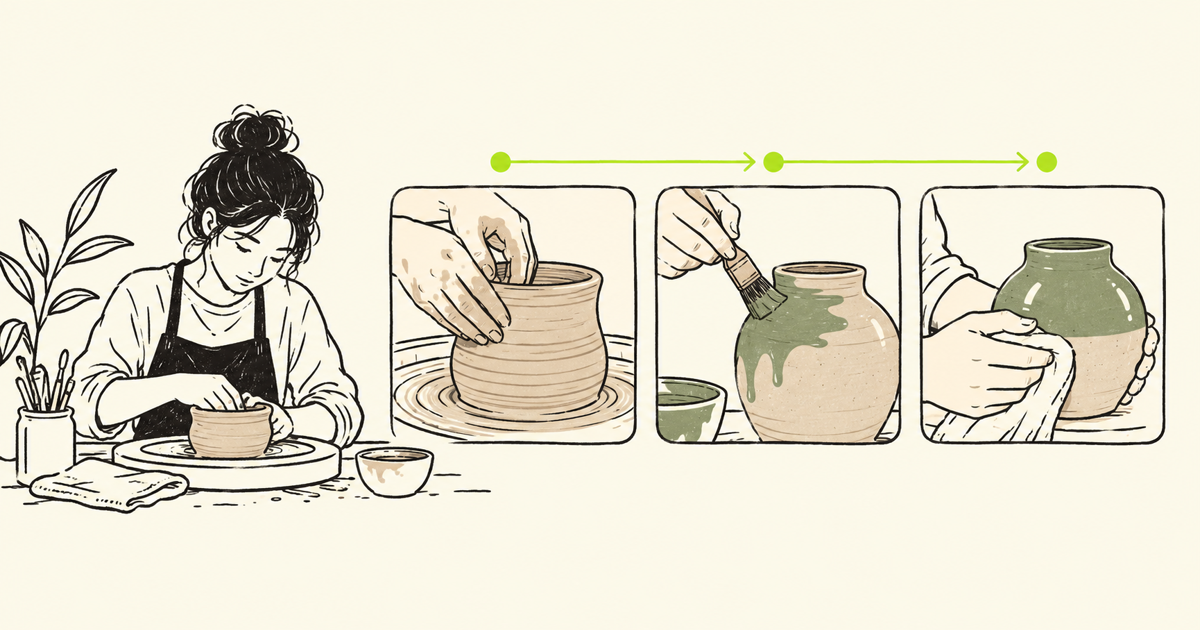
A painted-over layer or rejected sketch may be the most important part of the story. Video speed controls can compress repetitive motions, but slow down where a choice alters the work so the final image does not appear by magic.
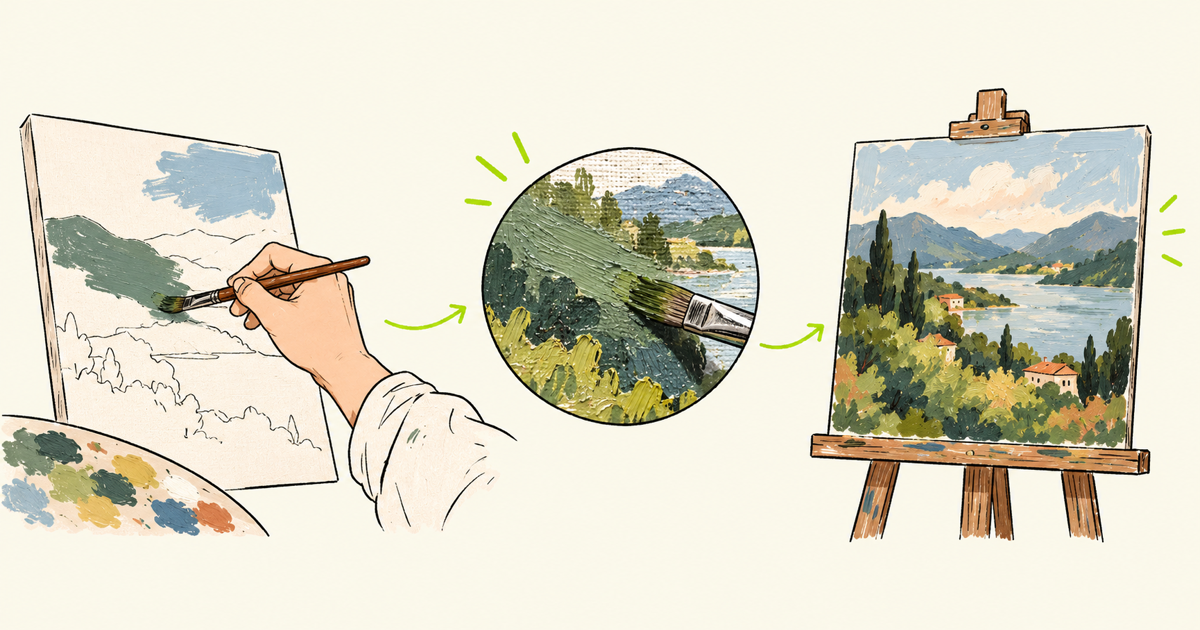
After the process, viewers need a steady view of the finished surface, texture or scale. AI video resizing should preserve the relevant detail in a short vertical version rather than cropping away the part the edit was building toward.

Identify the decision that changed the work, place the stages around it and reserve enough time for the finished piece.
Let The Process Be Part Of The Work
Use the studio footage you already have to show how the idea changed before the final piece appeared.
Edit your art vlog