
How Brooke Monk's Disney Food Review Is Edited (and How to Borrow the Format)
A frame-level breakdown of Brooke Monk's "everything i ate at disney" Short: chaptered park zones, ratings synced to cuts, and first-bite inserts, plus what transfers to your own theme-park food review.

Watch Brooke Monk's Short everything i ate at disney once and it looks like effortless snacking: a creator wandering Walt Disney World in Minnie ears, tasting things, pulling faces. Watch it at the timeline level and a different picture appears. Almost nothing in that minute is reviewed out loud. The verdicts live in the edit — rating text pops on the cut, first bites arrive as inserts, and the tour is organized into chapters so that a dozen items never blur into one long munch. This article is the timeline-level view: what one theme-park food review is doing scene by scene, and which parts of the format you can rebuild on footage of your own.
A note on scope before the breakdown. Everything below comes from a frame-level pass on this single Short, recorded in early June 2026, when the capture logged 2,972,407 views and 146,924 likes. One video by one creator is one sample — it shows how this format can be cut, not what any similar edit will earn — and the same food tour also ran on her TikTok. Treat the numbers as a dated observation of her reach, not a benchmark for yours.
One Short, Observed Frame by Frame
Video: everything i ate at disney — YouTube Short from @Brookemonk Recorded at capture, early June 2026: 2,972,407 views · 146,924 likes · 2,200 comments · roughly 60 seconds
A Sixty-Second Tour, Organized Like a Menu
The recorded pass splits the Short into four blocks, and the boundaries are not arbitrary — they follow park zones and food types, the way a tasting menu courses its way through a meal:
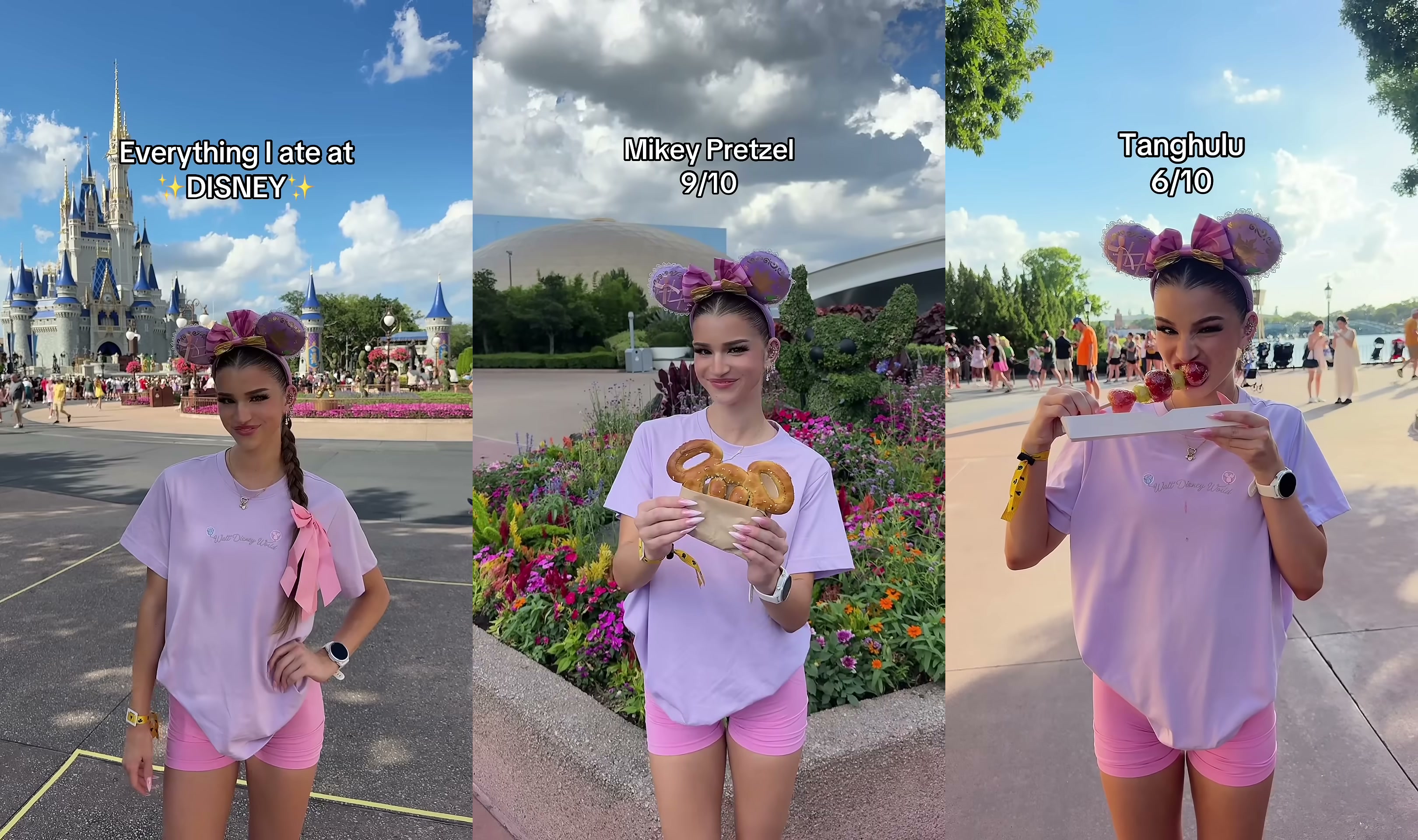
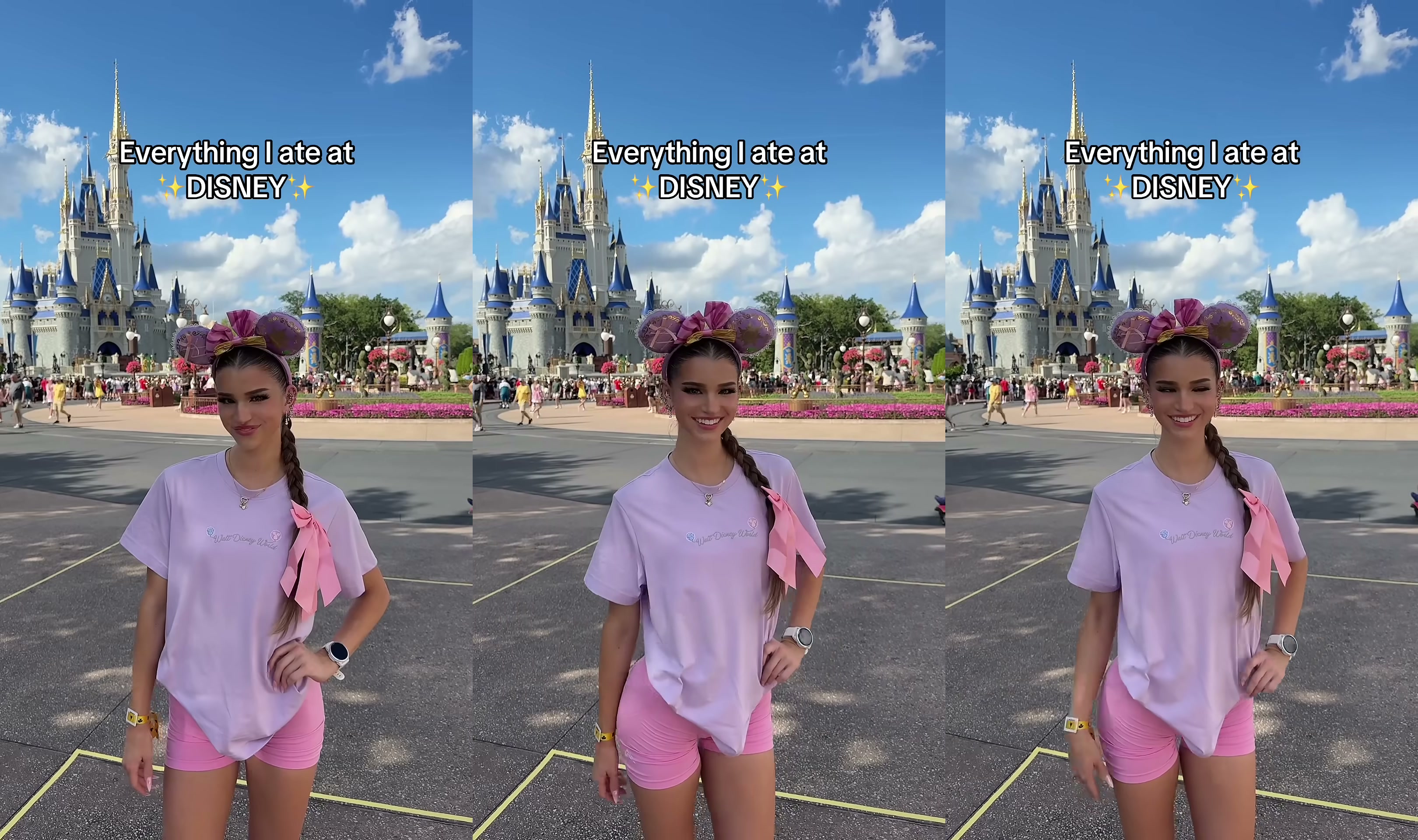
- Establishing block (0–9s). The video opens on Cinderella Castle — the most recognizable backdrop available — with a title overlay ("Everything I ate at DISNEY", recorded at 0–2.5s) stating the premise. Two items launch the tour: a cold brew and the Ronto Wrap from Star Wars: Galaxy's Edge. Whimsical orchestral music sets a tempo the rest of the edit holds.
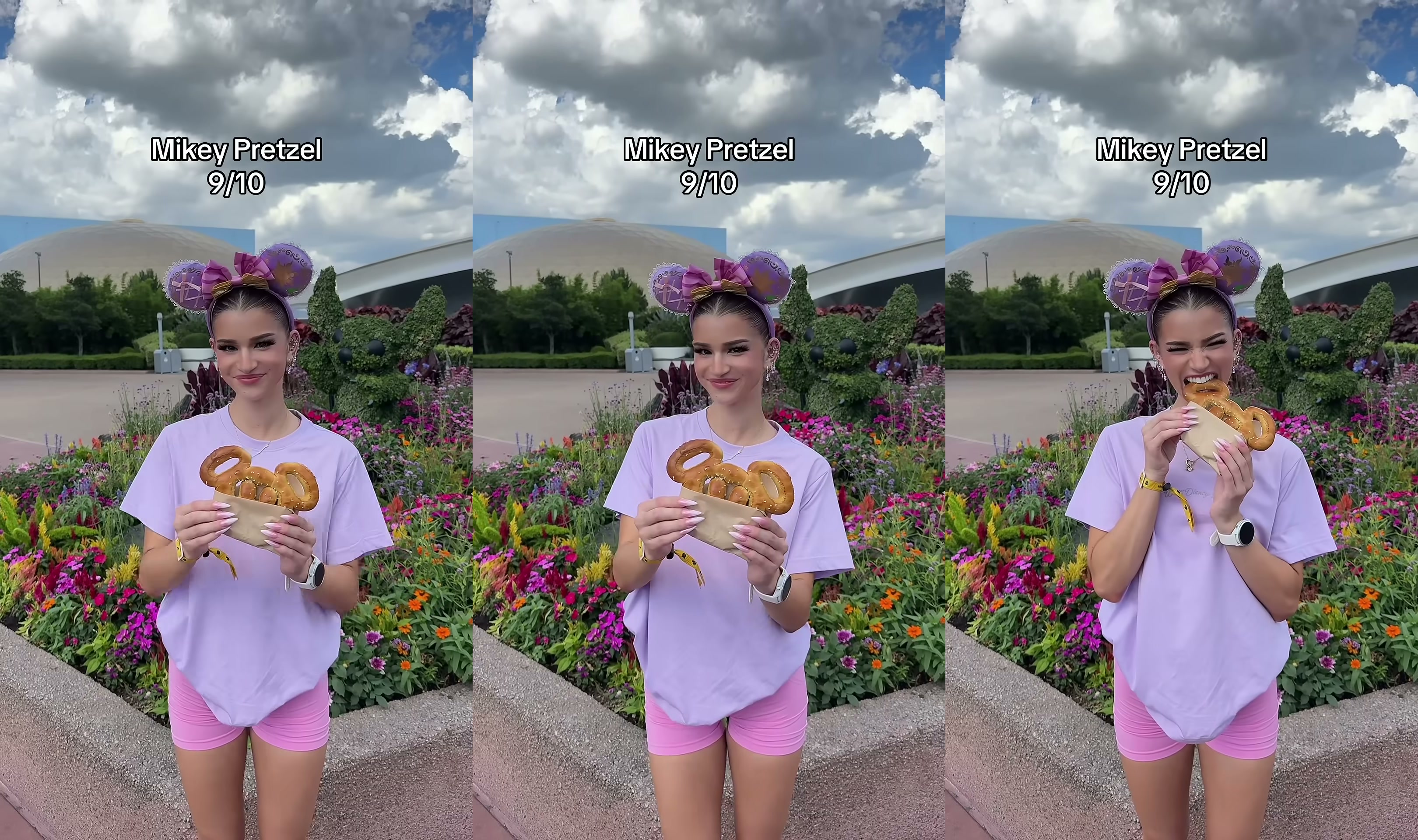
- Savory block (10–28s). Substantial savory items first — a BBQ brisket melt, a Buffalo chicken bowl — then the classics: a Mickey-shaped pretzel and a churro, each introduced with a cut timed to the first bite.
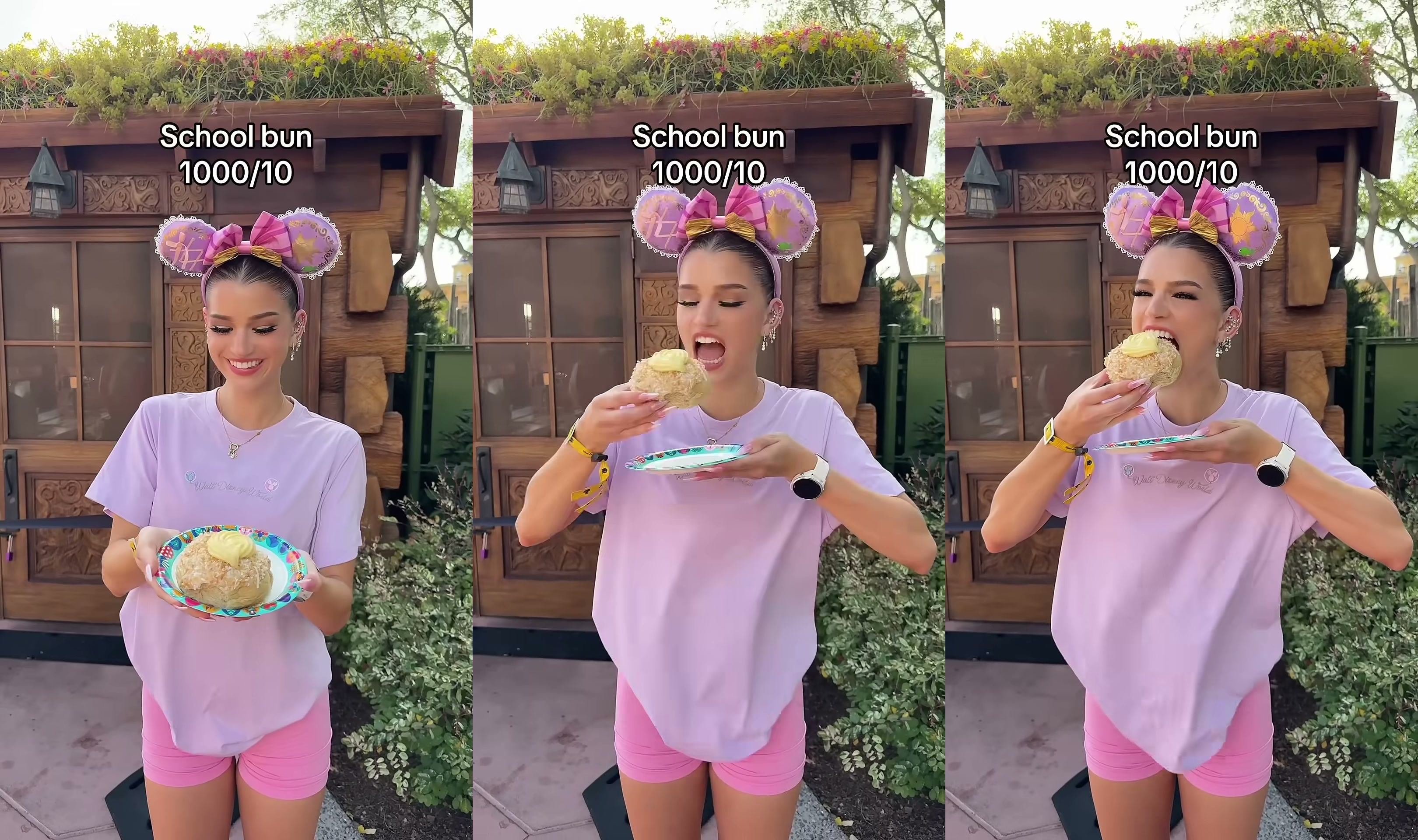
- International block (29–48s). The tour shifts to EPCOT's World Showcase: a Norwegian school bun, a lemon bolle, Chinese bao buns, and tanghulu skewers, whose crunch the edit shows rather than describes.
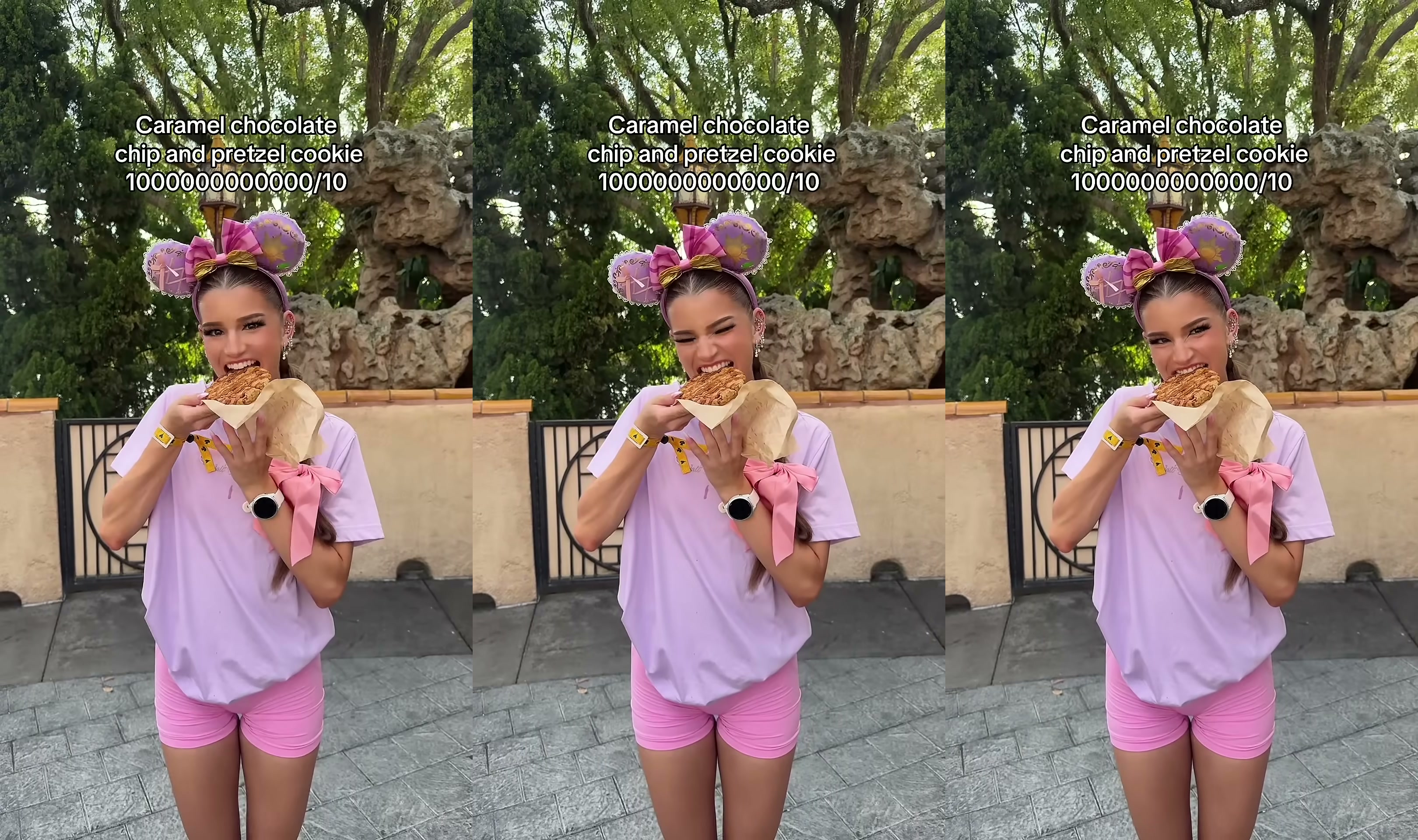
- Dessert finale (49–60s). Caramel-forward desserts close it out — a carrot cake whoopie pie and treats from Germany's Karamell-Küche — with the music reaching its recorded crescendo under the most exaggerated ratings of the video.
The chaptering is doing quiet structural work. A list video's natural failure mode is monotony: item, reaction, item, reaction, until the viewer's attention slides off. Sorting items by zone and course gives the audience an orientation system that narration would otherwise have to provide — the backdrop and the food type label each segment on their own. The escalation mirrors menu logic, moving from savory staples through international novelty to dessert, so the video has a rising line even before the ratings start climbing. Each block also gets one hero item — the tanghulu's crunch in the international chapter, the caramel finale — which is what a viewer remembers after the specifics fade.
Brooke Monk at Cinderella Castle
The Rating Overlay Is Doing the Reviewing
The most distinctive mechanic in the video is also the most easily misread. The exaggerated numbers — a "10000/10" for the BBQ brisket melt, escalating to "1000000000/10" — look like pure personality, but the recorded pass shows they are load-bearing editing elements with four jobs:
- Compression. A number delivers a verdict in about one second of screen time. No spoken review could cover twelve items in sixty seconds; the overlay can, because reading is faster than talking and it never competes with the music.
- Rhythm. Each rating pop lands in sync with the reaction shot, giving every item a punctuation mark the cut can land on. The ratings are effectively the percussion track of the edit.
- Escalation. An honest 4/10 for the Ronto Wrap arrives early in the recorded sequence, and that credibility deposit is what makes the later hyperbole read as earned delight rather than constant screeching. The numbers form their own rising line across the video — a pacing function, not just flavor.
- Signature. A hyperbolic scale is more memorable than a five-point one, and it gives commenters something to argue with, which is its own engagement loop.
One boundary matters here. The hyperbolic scale is a device, not a script. Write your ratings in your own voice — your version of exaggerated delight lands only if the phrasing sounds like you, and lifting her exact lines or building your edit around imitating her on-camera persona tends to read as costume. The numeric device transfers; the personality is the part you already have.
Shot Grammar: First Bites, Textures, and Sync
Item spotlights run roughly 2–4 seconds each in the recorded pass — dense, but comprehensible, because every item gets the same micro-grammar: a beat of establishing (the item held up, the backdrop visible), the first-bite insert, then the reaction with the rating pop. That repeatable three-beat structure is what lets the pacing stay aggressive without losing the viewer.
Two more observable patterns carry weight. Texture moments are shown, not narrated — the tanghulu's crunch is a visual and audible event on screen, arriving as an insert timed to the bite. And the consistent outfit — purple tee, pink shorts, Minnie ears through most of the recorded run — functions as an anchor when the backdrop changes every few seconds. What is directly observable is the consistency itself; that it is a deliberate branding choice is an inference, and worth treating as one. Bright natural daylight across the whole run keeps every item appetizing without any obvious lighting setup, which is worth noting for anyone shooting a park day: the format's look is mostly free.
This is a music-led montage, and that decides what it should and shouldn't borrow. Food footage cut to its own kitchen sound — every chop and sizzle as the beat — is a different edit with different rules; that lane belongs to Bayashi-style food content, and the two formats weaken each other when they trade rhythms.
Building Your Own Version
What transfers from this Short to your own park footage is the machinery, and most of it is decided at capture time rather than in post:
- Chapter by zone or course. Plan the day's items into blocks before you shoot, so each one has a recognizable backdrop doing the labeling.
- Three shots per item. An establishing hold, a first-bite insert, a reaction. That minimum is what makes 2–4 second spotlights editable at all; without the insert shots, the format has nothing to cut on.
- One hero item per chapter. Give each block a single texture or spectacle moment to own.
- Ratings synced to cuts, in an escalating plan. Include one honest low score early — the credibility is what licenses the later exaggeration — and write every number in your own voice rather than hers.
- A consistent visual anchor. It does not need to be an outfit-as-brand; anything stable across changing backdrops helps orientation.
What does not transfer: her persona and rating copy, which are the least reproducible elements anyway; and the view count, which is an observation of her reach in June 2026, not a property of the format. The overlay also only replaces spoken review because music fills that space in her cut — your version still needs a deliberate sound plan, whatever it is.
If the food you film is a home kitchen rather than a park, our breakdown of Jenn Im's what-my-son-eats videos analyzes that closer format. And for the shot-order, pacing, and sound technique of food sub-formats themselves — plating, ASMR, cheese pulls, cut reveals — the full guide lives in how to edit food videos.
From Reference to Your Own Edit
Copying a format like this by vibes — rewatching the Short and trying to "feel" the pacing — is where most attempts drift into imitation. The sturdier method is extracting the reference's measurable signals (shot lengths, cut-to-sound relationships, overlay timing) and reapplying them to your footage, which is what our guide on copying an editing style from a reference clip walks through. Sparki's copy-style feature automates that extraction — we build it, so weigh that accordingly — and it holds the same boundary this article keeps drawing: it applies a reference's cutting recipe to your own material, it does not reproduce the reference's content.
The engine worth borrowing, in one line: verdicts synced to cuts, inside a chaptered arc that escalates. Keep the voice yours, and the format does the rest.
https://sparki.io/blog/brooke-monk-disney-food-review-analysis