
The Calm-Cut GRWM: What Kylie Jenner's Edit Style Actually Does
A sample-based breakdown of one viral Kylie Jenner GRWM TikTok: step compression, a soft-light-to-sunlight reveal, retained ambient sound, and restrained dialogue — and how to run the calm-cut technique on your own routine footage.

The most instructive thing about Kylie Jenner's most-shared GRWM TikTok is a mismatch: the video cuts as fast as short-form demands, yet it feels as calm as a slow vlog. Almost no fast-cut video pulls that off. The pairing is not an accident of personality or production budget — it comes from four editing decisions that work for any subject with a routine worth filming: compress steps instead of time, keep the framing fixed, build the reveal from light rather than effects, and leave the sound mostly alone.
This is an analysis of a cutting technique, not an invitation to imitate a person. Everything below comes from one sample video, captured in April 2026, and every claim is either observable in that footage or marked as interpretation. The recipe transfers to your footage; the identity, the products, and the person on camera are not part of the recipe.
The Sample
The reference is a GRWM posted on Kylie Jenner's TikTok: brushing teeth, washing face, basic skincare, makeup, curling hair, and a final full-look reveal, in that order. At capture it showed roughly 10M views, 1.1M likes, about 2,600 comments, and 27.9K saves — a dated snapshot of one video, not a claim about her channel or a live number. What matters here is the structure, because structure is the only part that transfers to your edit.
One video is one video. Treat the breakdown below as a close read of a single edit that happened to travel far, not as a documented long-term style — and check it against your own routine footage before trusting any generalization.
The Core Mechanism: Fast Cuts That Feel Calm
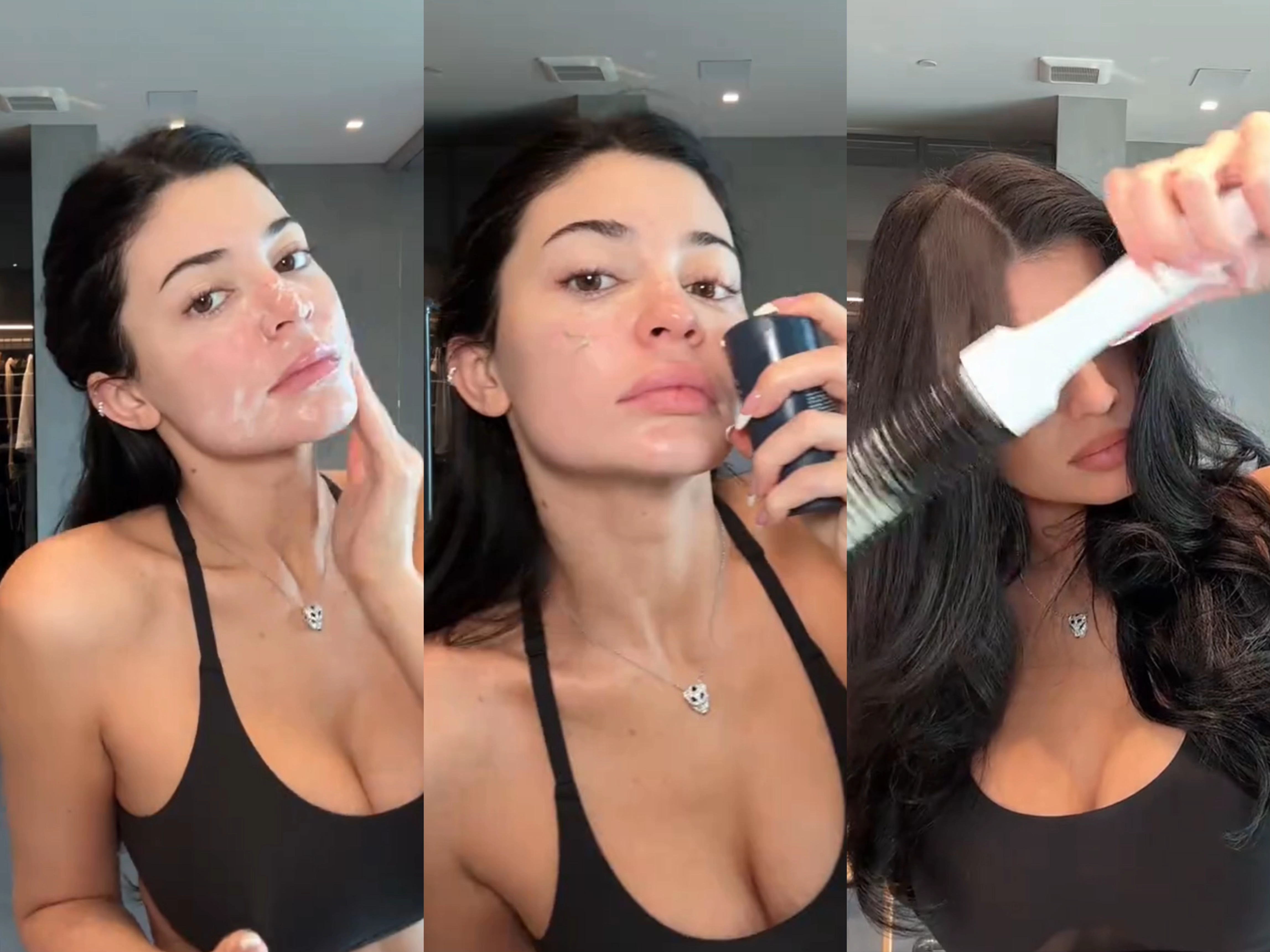
The edit compresses steps, not time. Each routine step survives as a beat of roughly one to three seconds showing exactly one clear action — the brush touching the cheek, the product opening, the curler closing on a strand — and everything between actions is cut away. On paper that is aggressive jump-cut density, the same density that makes most beauty content feel breathless.
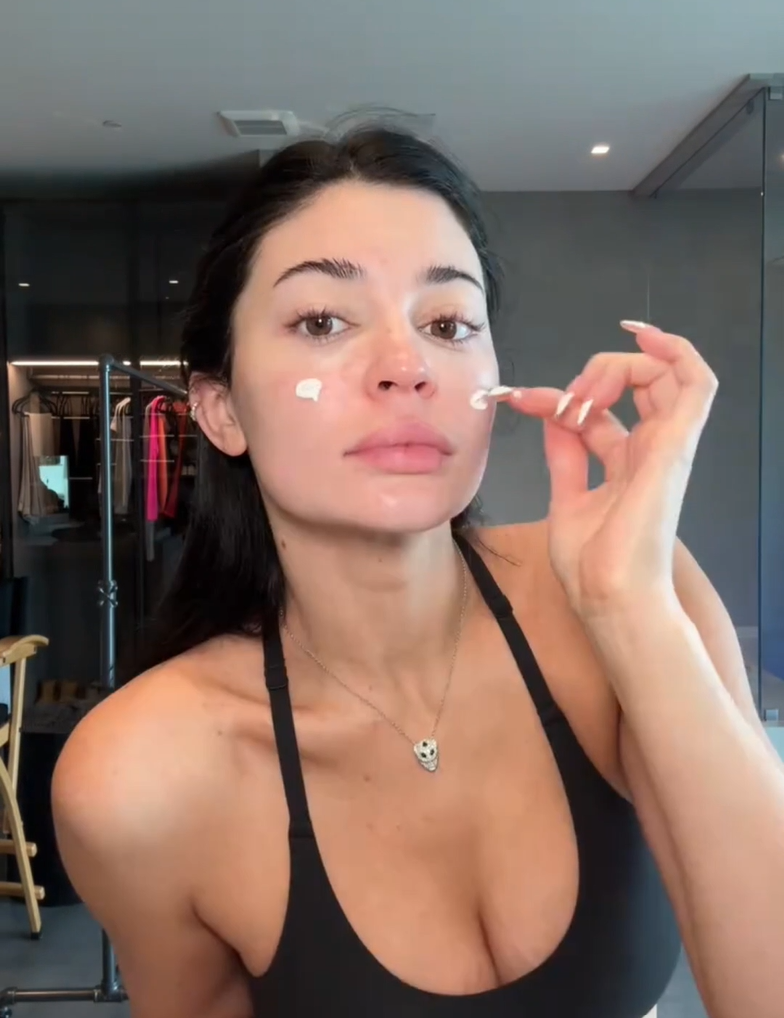
What keeps it calm is that the cutting is the only thing that changes. The camera holds one fixed position with the subject centered, occasionally leaning closer to the lens for detail. Because framing, background, and light all stay put, consecutive shots read as time passing inside a single continuous scene — closer to a well-paced time-lapse than to a montage. At each cut the viewer has nothing to re-orient on, so cutting speed never converts into stress.
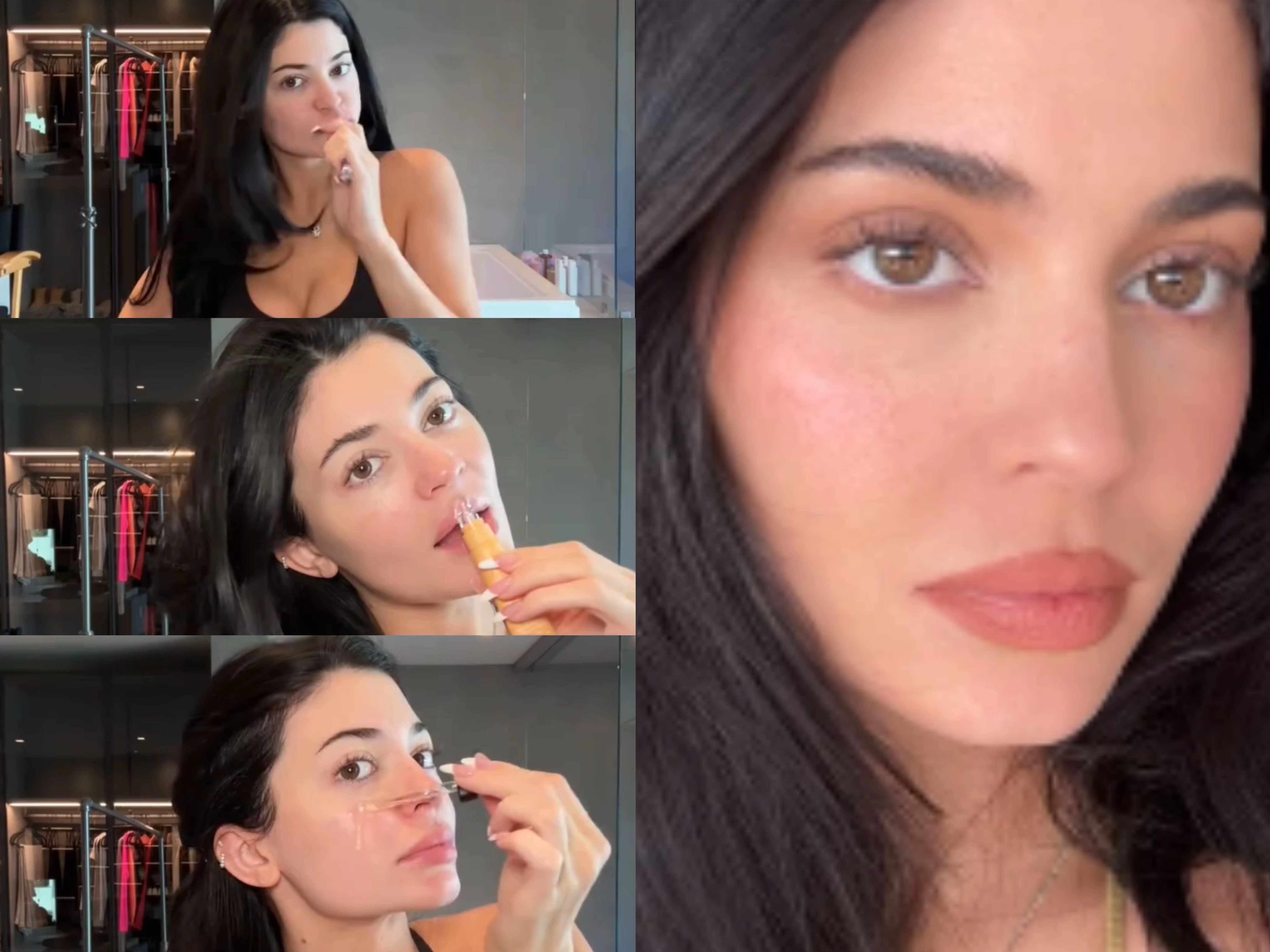
That is the trade at the center of this style: framing consistency buys cutting speed. The moment an edit mixes angles or locations, every cut forces a small re-orientation and the calm collapses. This format shoots one setup and protects it, which is also why it is cheap to produce — one camera, one position, no crew.
Lighting Carries the Story Arc
The video's only real "effect" is daylight. For the routine proper, the light is soft, even, indoor light: shadows lifted, skin texture visible, no hotspots. The final reveal then switches both location and orientation — outdoors, in natural sunlight, in a horizontal shot. No filter is doing heavy lifting, no transition goes beyond a hard cut, no graphics appear. The glow at the end is a physical change in the shoot, captured rather than manufactured in post.
The transferable part is a production decision more than an editing one. If the payoff of your video is "the finished look," stage that moment in better light than the process — a window, a doorway, a step outside — and let the edit simply place the cut. Reveals built from grading and glow filters read as processed precisely because the light never actually changed; a real light change reads as an event.
Sound: Kept Quiet and Mostly Real
Three audio decisions do quiet work here. The music bed is a medium-slow lo-fi / chill-pop track that sits under the visuals instead of pushing them; the tempo sets a mood floor while the cutting sets the pace, and the gap between the two is where the "calm but engaging" feeling lives. Ambient sound from the routine — water, product textures, movement — is left audible, which keeps a heavily compressed edit feeling like a real morning rather than an advertisement. And dialogue is nearly absent, so nothing competes with either layer.
Beat sync is loose by short-form standards. The lighter skincare moments sit on the gentler parts of the track, the hair and contour section builds with the track's momentum, and the reveal lands near the music's end for a soft closure — but not every cut is gridded to the waveform. That looseness is deliberate-looking and worth copying as a rule: let beats support transitions, and let a few cuts sit deliberately off-grid. Fully quantized cutting reads mechanical, which is the one thing this style never reads as.
Why the Format Holds Attention
You do not need speculation about the audience to explain the engagement; the mechanics are visible in the edit. GRWM is a format with a contract — viewers arrive knowing a reveal is coming, so the structure itself carries retention through the middle. The sensory load stays low (one framing, one soft track, real room sound), which makes continued watching effortless, while the cut density keeps delivering new visual information anyway. And the retained ambient sound does the authenticity signaling that a polished studio pass would destroy: the video feels overheard rather than performed.
None of those mechanisms depends on who is on camera. Any subject with a genuine routine — skincare, cooking prep, studio setup, desk reset — can be cut this way, which is exactly why the technique is worth separating from the celebrity example that made it famous.
Running the Calm-Cut on Your Own Footage
The recipe is a set of substitutions for the defaults most routine edits reach for:
| Standard routine-edit default | Calm-cut replacement |
|---|---|
| Cut every action to the beat grid | Medium-slow track for mood; cut on action, sync loosely |
| Mix angles to add variety | One fixed setup; lean in for detail |
| Reveal polished by grading and glow | Stage the finale in real, better light |
| Voiceover or dense captions | Retain ambient sound; minimal dialogue |
| Keep process moments for completeness | One action per beat; cut everything between |
As a working order:
- Plan the light arc before shooting: soft, even light for the process section, and identify where the finale can be filmed in stronger natural light.
- Lock one camera position with the subject centered, and get any detail shots by moving closer, not by re-framing.
- Mark every action in the routine and trim each to the one clear gesture it exists to show — one to three seconds per beat, all waiting time removed.
- Keep the ambient track, lay the music under it at a level that supports rather than leads, and duck the music if you speak at all.
- Cut the reveal as a light-and-framing change and resist adding effects; the contrast in the footage is the payoff.
- Nudge cuts toward the beats, then deliberately leave a few off-grid so the rhythm stays organic.
If you edit by briefing rather than by timeline, the same recipe maps onto plain-language instructions. A brief for this style reads like:
"Keep one action per cut, one to three seconds each, and cut all the waiting between steps. Keep the ambient sound and add a soft chill track underneath at low volume — no beat-grid syncing. The routine section stays in the soft indoor footage; end on the sunlight take with no added effects."
Sparki — the product we build — handles this pattern through copy-style: it analyzes a reference edit, extracts its cutting recipe, and applies that recipe to footage you already shot. The boundary is the honest one and worth stating: it learns the editing pattern, it does not copy the reference's content or person, and it works on your existing footage rather than generating new video. For the full method of decomposing any reference into measurable signals — pacing, BGM relationship, transition logic, energy curve — see how to copy an editing style from a reference clip.
Two Siblings of the Format
Two adjacent formats split the same calm discipline differently. Selena Gomez's red eyeliner routine applies it to a transformation arc — bare-faced open, bold signature close, under a minute — where the pacing serves a before-and-after rather than a routine. Kendall Jenner's high-end lip combo video runs the opposite tempo: slow, indulgent product close-ups with handheld breathing, trading this style's step compression for texture. Between them, the three pages cover the calm-minimal family — routine compression here, transformation pacing there, product intimacy in the third.
The calm-cut, in the end, is a set of refusals: one framing, one action per beat, one lighting change, almost no talking. Any routine can be cut this way, which is the entire point — the technique is what transfers, not the identity it happened to travel on.
https://sparki.io/blog/how-to-edit-like-kylie-jenners-hot-videos