
How to Master Luxury Fashion Content Creation Like sooyaaa
Discover the replicable luxury fashion content blueprint of BLACKPINK JISOO. Analyze her 41-second viral short’s framing, transitions, color grading & viral psychology to craft premium high-fashion social media clips.

Creator Spotlight: JISOO(8.9million subscribers )
JISOO is a global fashion icon and K-pop superstar whose digital presence blends the authority of a luxury brand ambassador with the intimacy of a personal diary. As a Dior global ambassador and member of BLACKPINK, her content occupies a unique intersection: high-fashion editorial meets behind-the-scenes access that no traditional media outlet can replicate.Her short-form content style is defined by what could be called "exclusive proximity" — the camera gets close enough to feel personal, yet every frame is composed with the precision of a magazine editorial. Rather than traditional vlogging, JISOO curates moments: a diamond ring, a sequined texture, a floral hairpiece. Each cut is deliberate. Each detail earns its screen time.By focusing on sensory luxury cues and the emotional arc of "preparation to performance," she transforms a 41-second clip into a multi-layered visual story. This is the blueprint for anyone looking to create high-status fashion content that stops the scroll.
Video Example
Video URL:https://youtube.com/shorts/yOjCkemrzQQ
Creator: JISOO (@sooyaaa__)
Published: 2026-05-09
Duration: 41 seconds
Video Stats: Views: 1,066,749 | Likes: 120,059 | Comments: 6,200
Copy link
Why This is a "Must-Copy" Style
This video establishes prestige within the first two seconds — not through words, but through environment. The Manhattan skyline at golden hour acts as a silent status signal, priming the audience for a high-status experience before JISOO even appears on screen. This "pre-hook" filters the audience instantly, attracting viewers who respond to travel, luxury, and global celebrity culture.The second reason this style is a "must-copy" involves the tactical use of sensory fragmentation. The video doesn't just show an outfit — it deconstructs luxury into beautiful, bite-sized fragments: a diamond ring, a sequined texture, a floral hairpiece. Each detail shot creates a "sensory overload" of quality that forces repeated viewing. In 41 seconds, this clip delivers more visual information than most 3-minute vlogs. That density is a deliberate retention mechanism.
Try Now
1. Core Structure (Video Narrative Arc)
The video follows a "Preparation to Performance" arc divided into five emotionally distinct stages.
The Establishing Environment (0–2s)
A cinematic slow zoom on the Manhattan skyline sets the geographic and social context. This short segment acts as a location anchor that signals: this is not an ordinary day. The Empire State Building at golden hour communicates grandeur without a single word of narration.Editing technique: Wide establishing shot → slow zoom → hard cut to intimacy. The speed contrast between the slow zoom and the sudden cut to close-up beauty prep creates a whiplash that hooks the viewer.
The Intimate Transformation (2–9s)
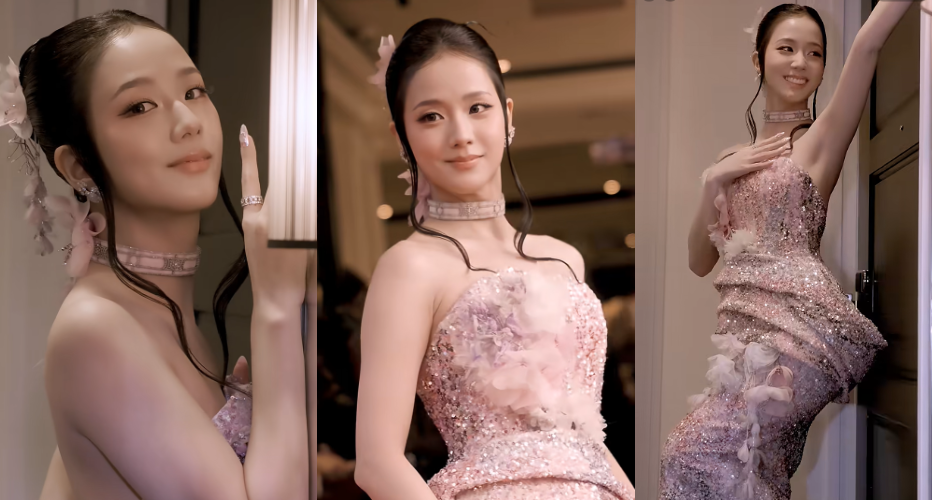
The video shifts from the vast city to the private details of beauty preparation. Close-up shots of makeup brushes, lipstick applications, and hair accessories create a GRWM (Get Ready With Me) fantasy that feels exclusive and aspirational simultaneously, in the same quiet-luxury register as Kendall Jenner's high-end lip combo video. The viewer is invited backstage at an event most people will only watch from the outside.Editing technique: Each beauty detail is shown for 0.5–1.5 seconds maximum. The pace is fast enough to feel exciting but slow enough to absorb each detail. No single cut outstays its welcome.
The Grand Reveal (9–25s)
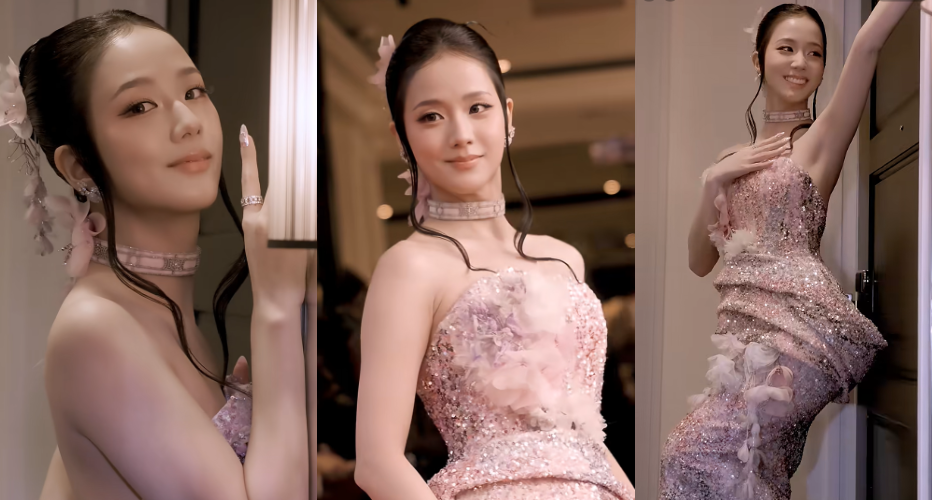
This is the emotional peak. The primary outfit — a pink sequined Dior gown — is showcased as the creator moves from hotel corridor to red carpet. The transition mirrors JISOO's actual physical movement, giving the viewer the sensation of accompanying her on the journey.Editing technique: The "reveal" is not a single frame — it's a sequence of angles that build cumulatively. Wide shot → medium shot → close detail → wide again. Each angle adds a new dimension of the garment, creating a 360° mental model for the viewer.
The Texture Study (25–34s)
Rather than holding on wide shots, the camera dives into macro-level details: nails, jewelry, shoes. These ultra-close shots highlight specific luxury elements that define the Dior aesthetic. Shot at high frame rate and edited with rapid-fire precision, they create a rhythmic pulse that matches the electronic underscore.Editing technique: Macro close-ups are edited in rhythmic triplets — ring, nail, shoe — creating a visual "beat" that feels musical even without explicit sync-to-sound editing. The brain fills in the rhythm.
The Stylistic Pivot (34–41s)
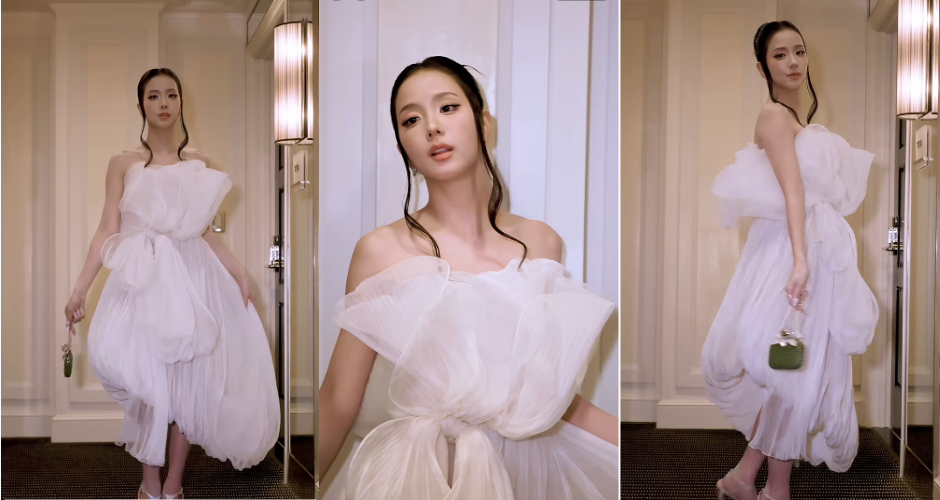
The video closes with an unexpected second look — a white architectural dress — which subverts expectations and leaves the viewer wanting more. This "to be continued" atmosphere is a subtle but powerful retention mechanic for profile visits and follows.Editing technique: The tonal shift from pink-and-sequin to white-and-structured is not just a wardrobe change — it resets the color palette entirely, making the final seconds feel like the beginning of a new story rather than the end of one.
2. Cinematic Composition and Framing Mastery
The Rule of Centered Authority
Throughout the video, JISOO is almost always centered in frame. This isn't accidental — center framing communicates authority and prestige. Unlike the "rule of thirds" used in travel or lifestyle content, center framing in fashion content signals that the subject is the event. The background exists only to frame, never to compete.Key rule: When the subject is the luxury product itself (the person, the outfit, the jewel), center them. Reserve off-center framing for environment shots where context matters.
Depth Compression via Tight Lenses
The tight framing throughout the video (presumably shot on a longer focal length — 85mm equivalent or longer) compresses depth and isolates the subject from any background clutter. Even when JISOO is on a busy red carpet, the bokeh ensures she remains the singular visual anchor.Key rule: Longer lenses flatten backgrounds and create a "cleaner" luxury aesthetic. For fashion content, this is non-negotiable — wide angle distorts proportions and reveals unflattering backgrounds.
3. The Psychology of Luxury Editing
Light Leak Transitions as Narrative Bridges
At the 17-second mark, the transition from hotel to red carpet uses what appears to be a light leak overlay that mimics the natural flash of paparazzi cameras. This is a sophisticated editorial choice: it uses a visual element native to the event (press photography) as the bridge between two scenes. The transition feels organic to the world rather than like an editing trick.Key rule: The best transitions are diegetic — they feel like they belong to the environment of the story, not like a filter applied in post.
Rhythm Without Explicit Music Sync
The editing rhythm in the beauty montage (2–9s) is precise without being mechanically synced to a specific beat. Instead, the cuts follow a natural visual cadence: each shot is long enough to register, short enough to maintain urgency — the kind of signature cadence you can replicate when you copy video editing style from a reference. This "felt rhythm" is harder to achieve than beat-synced editing but feels more organic — and works regardless of which music track is placed underneath.
The Sensory Overload Principle
At 26 seconds, rapid-fire shots of diamond rings, manicured nails, and custom shoes create a density of luxury cues per second that overwhelms the viewer's visual processing in a pleasurable way. Neuroscience calls this "positive cognitive load" — the brain is working, but enjoying the work. This is why the video demands multiple views: there is always something new to catch.
4. Color Grading and Mood Architecture
Warm-to-Cool Lighting Shift as Chapter Marker
The video's lighting tells its own story. The opening Manhattan skyline is bathed in warm sunset tones (golden hour) — evoking intimacy, warmth, and the private prelude to an event. As the video progresses into the red carpet at the 17s mark, the lighting shifts to a cooler, brighter event palette. This shift signals the transition from the private preparation phase to the public performance phase.Key rule: Use lighting as a chapter marker. Warm = private, personal, preparation. Cool = public, performance, arrival.
Sequin as a Cinematographic Asset
The pink sequined gown is not just a fashion choice — it's a cinematographic one. Sequins reflect and scatter light dynamically with every micro-movement, creating organic sparkle that no color grade can replicate in post. This is why sequined and embellished garments dominate fashion short-form video: they are visually "alive" in a way that matte fabrics cannot achieve.Key rule: If your subject has the option, choose textured, reflective garments for video. They reward close-up shots and make motion look expensive.
5. Platform Mechanics and Virality Drivers
The First Frame Filter
The opening frame — a soft golden skyline — is calm and prestigious, not loud or clickbait. This is a deliberate choice for an established creator with high brand equity. For JISOO's audience, understated prestige is the hook. The visual says: "You already know this is worth your time."Key insight: The optimal hook depends on your existing trust level with your audience. For new creators, a more aggressive visual hook (action, surprise, text overlay) is necessary. For established creators, confidence in the opening frame signals authority.
Comment-Bait Through Incomplete Answers
The video never fully answers all of the viewer's questions. What event specifically? What are the full looks? Where is the after-party? These "open loops" drive comment engagement as viewers ask for more. The 6,200 comments on a 41-second video confirm this mechanic is working.
How to Replicate
| What to Replicate | Reference Video | How Sparki Replicate |
|---|---|---|
| Status Hook | Cinematic NYC skyline at golden hour (0–2s) — establishes prestige before the subject appears | Open with a location shot that signals the status of the event, not the creator |
| Sensory Fragmentation | Rapid macro cuts of ring, nail art, shoes (25–34s) — luxury deconstructed into detail shots | Shoot 10–15 macro detail clips of textures, materials, accessories — edit in rhythmic triplets |
| Center Frame Authority | JISOO centered in every fashion frame throughout — background always in bokeh | Use longer focal lengths (85mm+), center the subject, eliminate background competition |
| Diegetic Transitions | Light leak at 17s that mimics paparazzi flash — bridge between hotel and red carpet | Find a visual element native to your location (flash, dust, light, motion blur) and use it as a transition |
| Warm-to-Cool Mood Shift | Golden prep interior → cool bright event exterior — lighting signals chapter change | Deliberately shift your color temperature between private and public scenes as a structural marker |
| The Surprise Second Look | White architectural dress at 34s — subverts the "pink gown" expectation completely | Always save a second, tonally different look for the final act to create a "to be continued" effect |
| Open Loop Comments | Video never shows the full event or after-party — 6,200 comments ask for more | Leave 1–2 obvious questions unanswered to drive comment engagement |
https://sparki.io/blog/how-to-master-luxury-fashion-content-creation-like-sooyaaa