
Travel Highlight Reels Like NicoleLaeno: A 21-Second Breakdown
A scene-by-scene analysis of Nicole Laeno's 21-second Disney cruise highlight reel: her ultimate-access hook, three-act structure, beat-matched cutting, consistent warm color grade, five-type shot variety, and how to adapt each technique to your own travel footage.

This breakdown is based on the Short embedded below (published June 10, 2026) and a scan of her recent travel uploads around that date; all timestamps refer to that video.
Nicole Laeno is a strong example of modern lifestyle and travel influencers who have mastered the art of the "micro-vlog." Her content strategy focuses on high-speed storytelling, blending cinematic quality with a relatable, high-energy personality. She excels at condensing complex, multi-day experiences into bite-sized, rhythmic cuts that hold viewer attention from the first frame to the final payoff. Her style is defined by a "perpetual summer" aesthetic — bright, vibrant colors and high-key lighting that makes every location look like a dream destination. She understands that in the world of short-form content, the first three seconds carry the video. By opening with high-value "social proof" moments, she establishes immediate credibility before the viewer even processes what they're watching.
Video Example
Video URL: https://youtube.com/shorts/RuwTxwLwSZQ Creator: Nicole Laeno (@NicoleLaeno) Published: 2026-06-10 Duration: 21 seconds Video Stats (captured June 2026): Views: 23,611 | Likes: 1,964 | Comments: 25
Copy link
Why This Style Works
The brilliance of this 21-second reel lies in its relentless momentum and psychological framing. Instead of simply showing a cruise, the creator frames the entire experience as a "sign" for the viewer — turning passive watching into a fated, personal interaction. Every single creative decision, from the opening frame to the final pose, is engineered to maximize emotional impact and shareability.
Try Now
1. The Hook: "Ultimate Access" in Under 1 Second
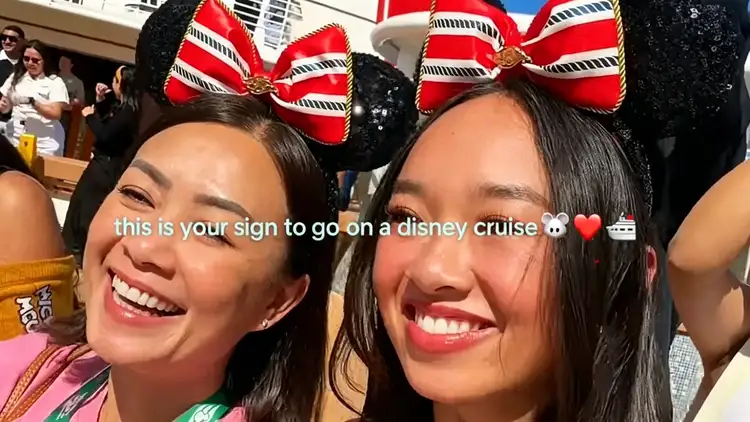
The video opens at 0.5s with Nicole in a navy dress and Minnie Mouse ears, holding hands with Captain Mickey in a warm-toned ship atrium. This is the "Ultimate Access" hook technique at its finest. The psychology behind it: viewers don't need context. They immediately recognize Mickey Mouse as a global icon, which signals this is a premium experience. The text overlay — "this is your sign to go on a disney cruise 🚢 ❤️ ☁️" — delivers a direct address to the viewer, bypassing critical thinking and speaking straight to desire. What makes it work:
-
Subject is LARGE and centered in frame
-
Lighting is vibrant and warm — no dark, moody tones
-
Text appears instantly, not after a delay
-
Time to main content: 1.0 second — zero wasted frames
To apply it to your own footage: open your reel with the highest-value moment of the entire trip, not a scenic establishing shot. Lead with the climax, not the buildup.
2. Three-Act Structure in 21 Seconds
Despite its length, this reel follows a tight three-act narrative arc that gives it a complete, satisfying feel:
Act 1 — Establishment (0–4s)
Nicole poses with Mickey and Minnie, cuts to the ship at port against a bright blue sky, then reveals a towel swan on the stateroom bed. Three locations, three value signals, four seconds. Editing technique: Fast jump cuts on the beat. Each shot lasts 1–1.5 seconds maximum. The towel swan is a deliberate "insider detail" — Disney fans recognize it instantly, which creates an in-group connection with the audience.
Act 2 — Energy & Atmosphere (4–12s)
The middle section explodes into crowd energy. Deck parties, Donald Duck, Pluto, silhouette screens, family reaction shots. This is the "social proof" section — it answers the unspoken viewer question: is this actually fun, or just pretty? Editing technique: Rhythmic cutting between wide deck shots and tight close-up reactions. The standout moment is a candid shot of Nicole's mother laughing genuinely at 11.1s — the most emotionally resonant frame in the entire video. It shifts the feel from "travel ad" to "family memory."
Act 3 — Amenities & Payoff (12–21s)
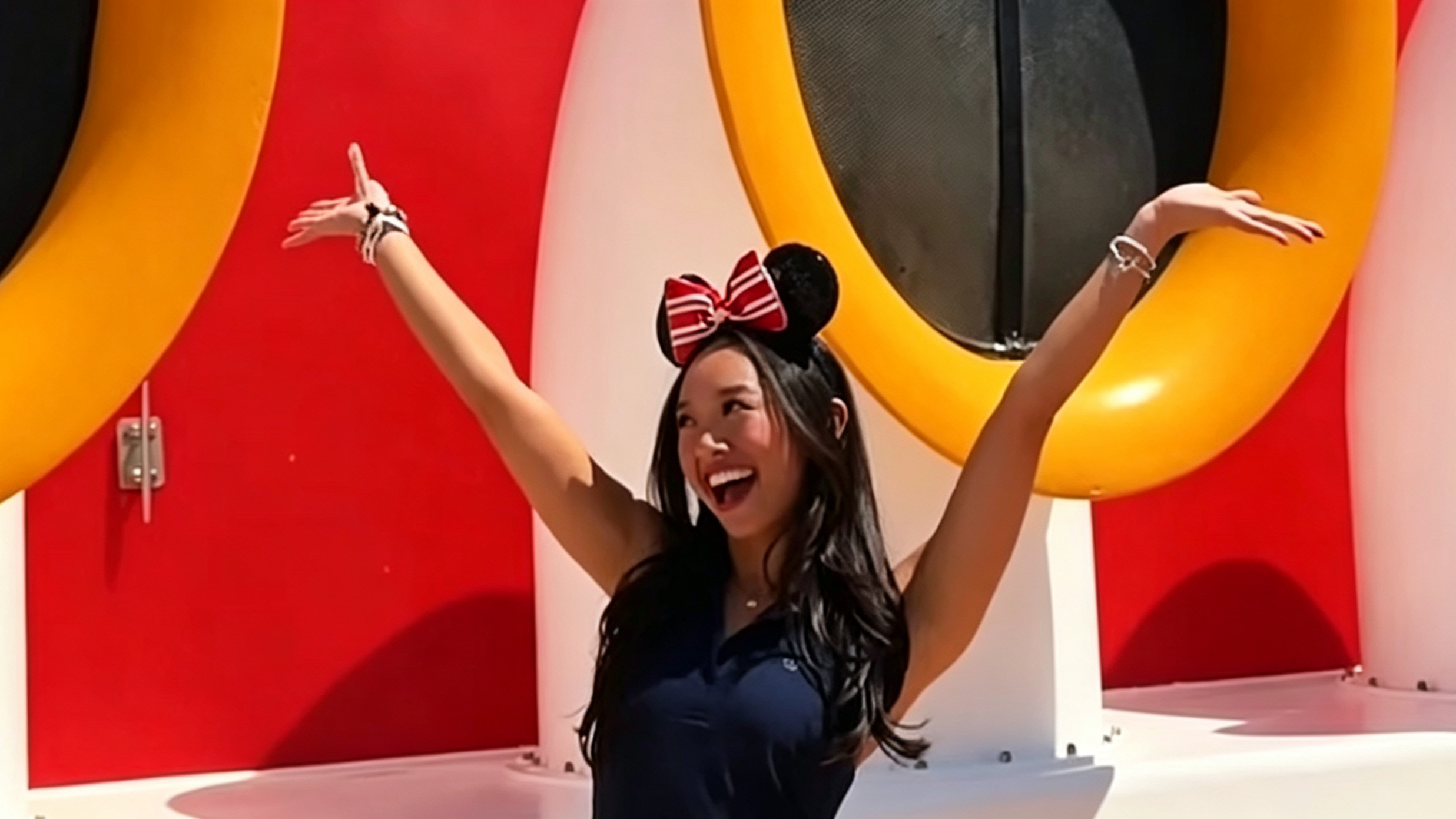
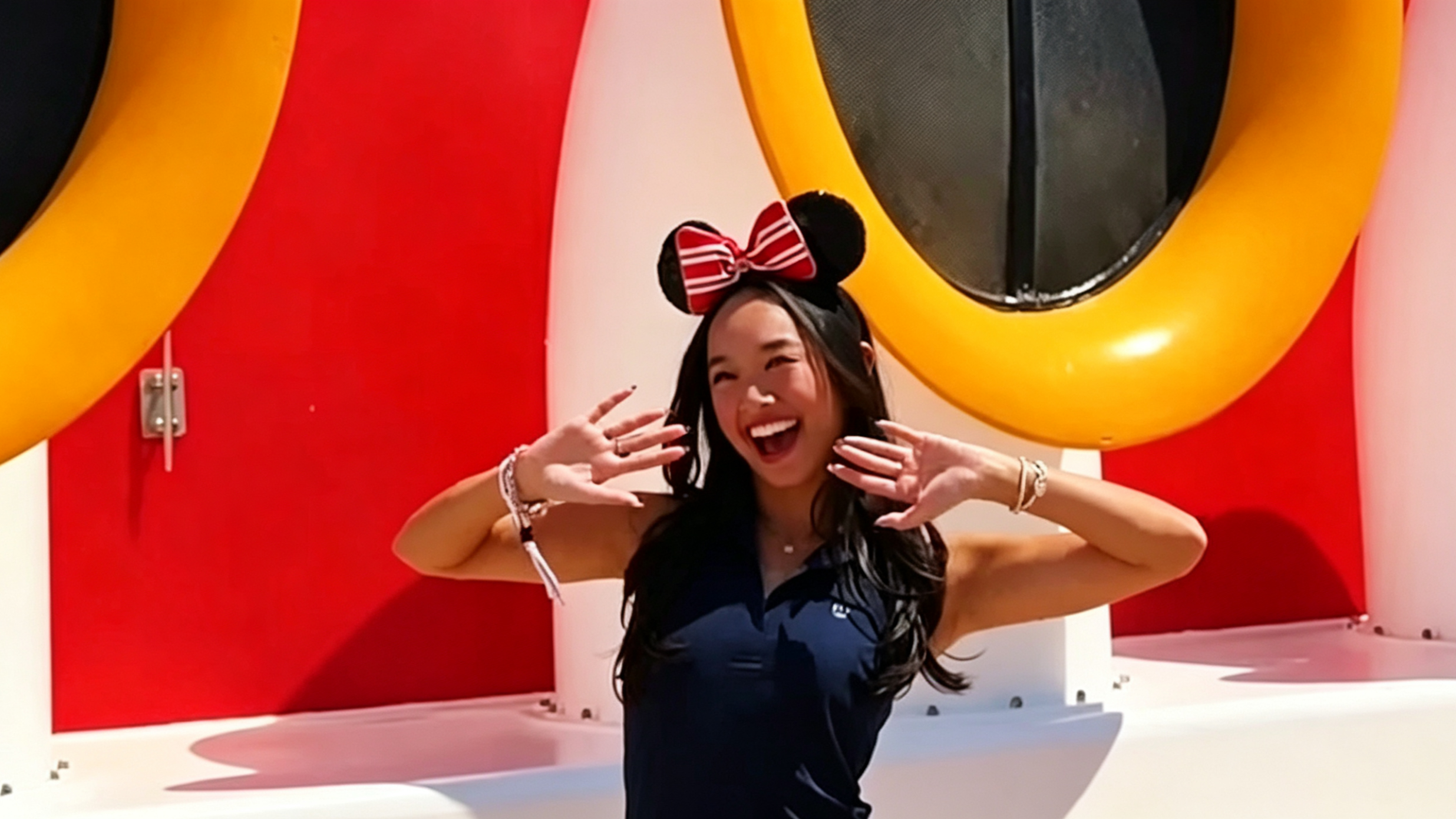
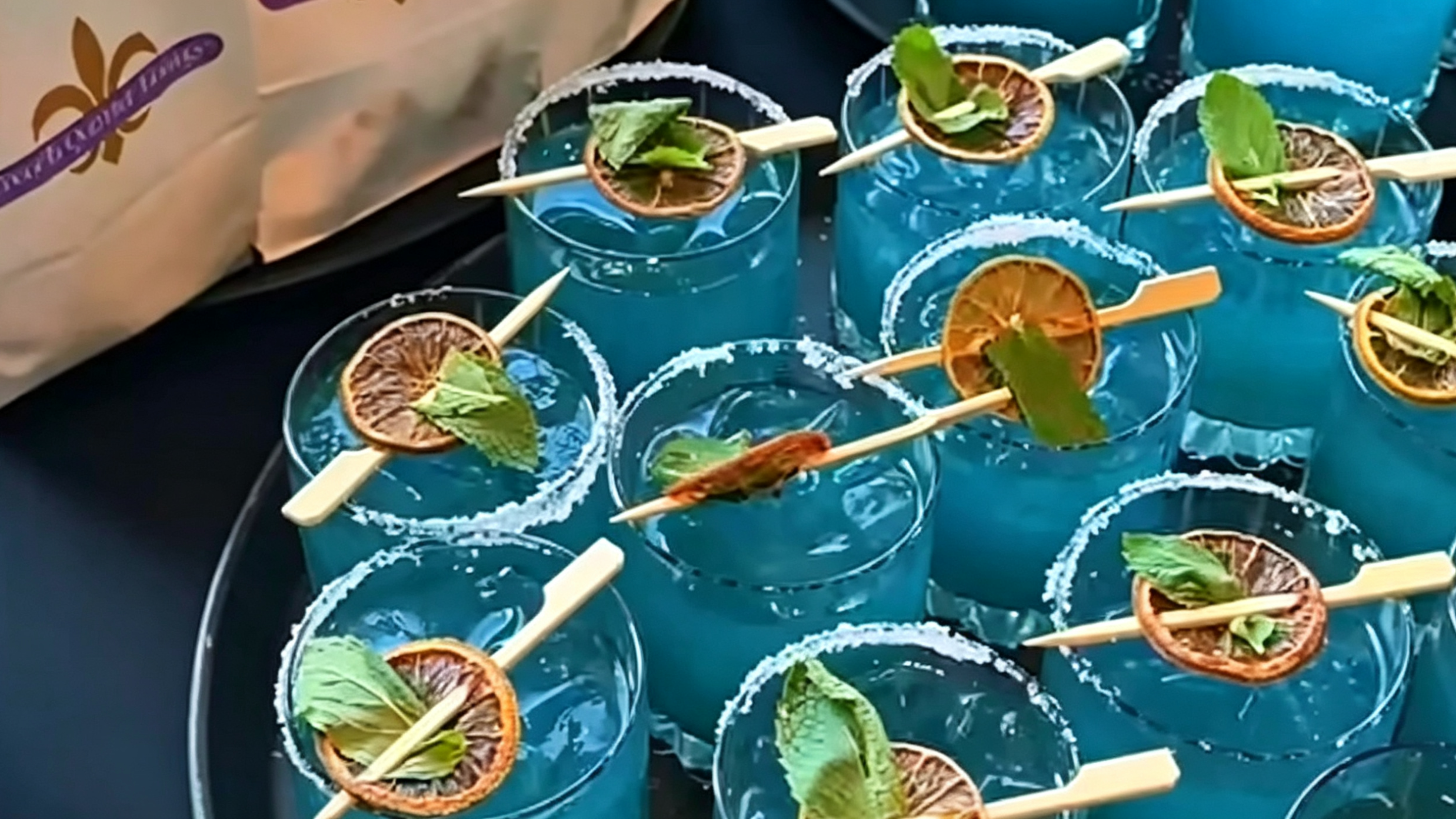
The final act showcases specific value propositions: Toy Story youth clubs, Palo restaurant gourmet dining, Princess Tiana live performance, and a triumphant final pose on the top deck with the Mickey funnel in frame. Music swells to a climax here. Editing technique: Quick pans and zooms to pack maximum detail into 2-second windows. The transition from a quiet, elegant gourmet meal to a vibrant live jazz performance by Tiana is the sharpest tonal contrast in the reel — and it lands perfectly because it's timed to a beat drop.
3. Beat-Matched Editing: The Invisible Director
The music doesn't just accompany this video — it directs it. Every single cut is triggered by a musical beat, creating a hypnotic rhythm that the brain finds deeply satisfying.
How beat-matching works here:
-
Hard cuts on snare hits — transitions between character scenes (Donald Duck → wide deck shot) happen on the sharpest beats
-
Wide shots on sustained notes — when the music breathes, the edit breathes too, giving the viewer a moment to absorb scale
-
Zoom-ins on build-ups — as the orchestral track layers in, the editing responds with tighter, more intense frames
This technique is what separates amateur travel edits from professional highlight reels. An amateur editor cuts when the content feels "done." A professional editor cuts when the music tells them to. Takeaway: Before you edit, map out the beat timestamps of your track. Every cut should land on a beat, a snare hit, or a musical transition — never in between.
4. Color Grading & Visual Consistency
The entire reel maintains a consistent warm, high-saturation aesthetic with no exceptions. This visual coherence is what makes it feel "premium" rather than assembled from random clips. Key color choices:
-
Navy dress + Mickey's red funnel — the blue/red contrast pops against the bright blue sky
-
Golden indoor lighting — all indoor shots (atrium, restaurant, Toy Story area) have a warm yellow-gold cast, creating continuity between very different locations
-
No dark frames — there is not a single dark or underexposed shot in 21 seconds. Every frame is WELL_LIT or VIBRANT
To apply it to your own footage: shoot in good light and apply a consistent LUT before your final cut. The color grade should make every location feel like the same "world," even if they were shot on different days.
5. Shot Variety: The 5-Type Rule
In 21 seconds, Nicole uses at least five distinct shot types to prevent visual fatigue:
| Shot Type | Example Moment | Purpose |
|---|---|---|
| Close-up portrait | Nicole + Captain Mickey at 0.5s | Hook, establish creator |
| Wide establishing | Ship at port at 1.8s | Scale, location context |
| Crowd/atmosphere | Deck party at 8.5s | Energy, social proof |
| Candid reaction | Mother laughing at 11.1s | Emotion, authenticity |
| Detail/amenity | Gourmet appetizer, Toy Story sign | Specific value proposition |
Cycling through these shot types keeps the viewer's eye constantly stimulated. If two similar shot types appear consecutively, the brain registers it as "repetitive" and attention drops.
6. Emotional Anchoring: The "Fated Sign" Formula
The text overlay "this is your sign to go on a disney cruise" is more than a caption — it's a psychological trigger. This framing technique works because it:
-
Validates the viewer's existing desire — it assumes they already want to go, they just need "permission"
-
Creates a parasocial moment — the creator is speaking directly to you, not broadcasting to a crowd
-
Removes decision friction — framing it as a "sign from the universe" bypasses the rational cost/benefit calculation
Combined with the "kid at heart" energy of Nicole running toward the Toy Story area and the family joy moments, the reel doesn't sell a product. It sells a feeling — and that is what makes it easy to share.
How to Apply It to Your Own Footage
The checklist below maps each observable choice in the reference video to the same move on your own travel footage.
| Element | What Nicole Did | How to Apply It to Your Footage |
|---|---|---|
| Hook | Captain Mickey in frame within 0.5s | Open with your highest-value access moment |
| Music | Beat-matched every single cut | Map beat timestamps before editing |
| Shot variety | 5+ shot types in 21 seconds | Plan: portrait / wide / crowd / reaction / detail |
| Color | Consistent warm, high-saturation grade | Apply one LUT across all clips |
| Emotion | Candid family moment at 11s | Include one genuine, unposed human reaction |
| Framing | "This is your sign" direct address | Write your text overlay as a personal message |
| Ending | Triumphant pose + iconic landmark | Close with a clear visual "payoff" moment |
https://sparki.io/blog/how-to-master-travel-highlight-reels-like-nicolelaeno