
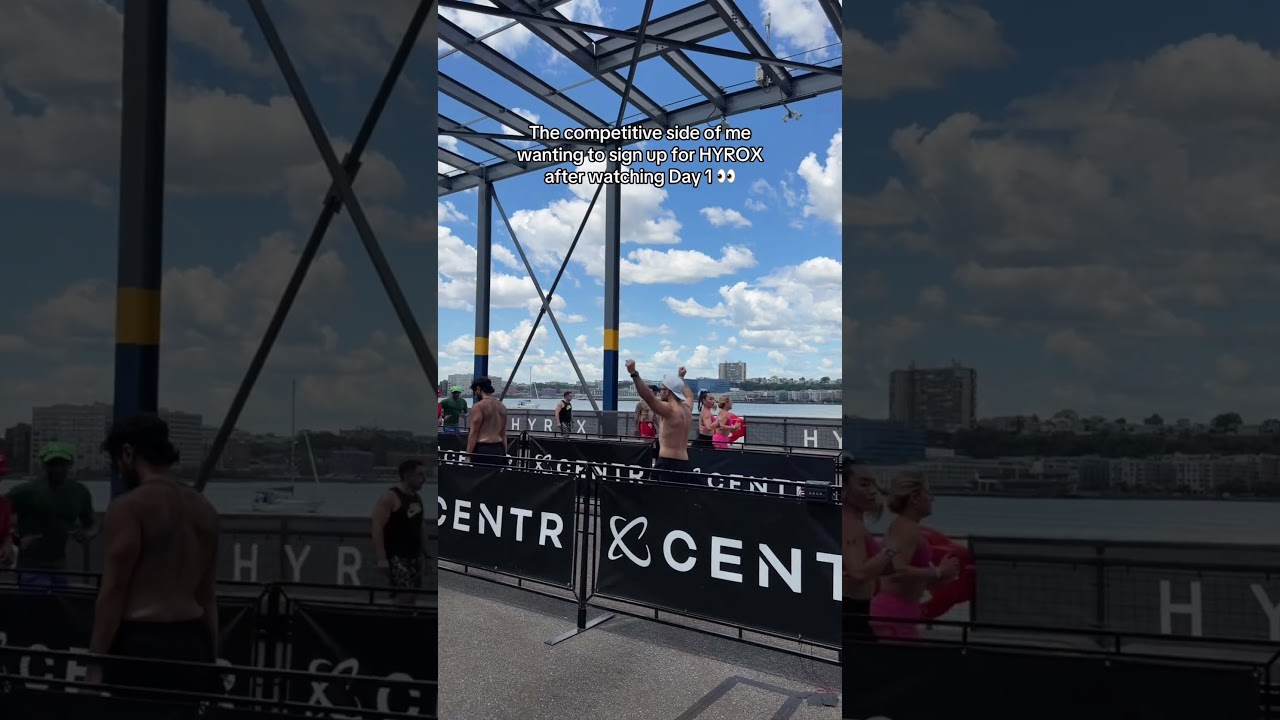
How Katie Feeney Edits Personal Sports Vlog Hooks

Opening with a personal confession rather than a performance, Katie Feeney's HYROX NYC Short converts a fitness achievement into an emotional story in 14 seconds — with the Manhattan skyline doing the heavy lifting as a status backdrop.

Katie Feeney HYROX NYC personal emotion sports vlog YouTube Shorts banner

Or start from one of Katie Feeney's own videos

7.1M

Subscribers

YouTube Shorts

Platform

~14 sec

Avg Length

Sports Lifestyle

Primary Format

Katie Feeney Editing Style Example

HYROX NYC race day — personal emotion vlog

Published June 2026 · 14 seconds

2,400,000+

Views

130,000+

Likes

1,600+

Comments

Why This Edit Holds Attention

This video works because it opens with personal vulnerability rather than physical performance. Most fitness content opens with the achievement: the finish line, the lifted weight, the race number. Katie Feeney opens with the feeling: the mental state before the event, the personal significance of the moment. This creates an emotional investment in the achievement before the achievement is shown — the viewer is now rooting for something, not just watching someone.

The 14-second format is a structural constraint that becomes a creative asset. With only 14 seconds, every frame must carry emotional weight. The Manhattan skyline behind her during the race scenes functions as a location status signal — the setting validates the scale of the achievement without requiring any additional explanation. When the city is your backdrop, the personal emotion reads as proportional to the environment.

Katie Feeney Video Editing Breakdown

The 14-second clip runs a three-beat structure: personal emotion opener, achievement evidence, city-backed resolution — each beat essential to the emotional punch. Use the reference's buildup and closing pace to guide a fitness vlog about your experience.

  1. 0:00 – 0:04

    Beat 1 — The Vulnerability Opener

    A direct-to-camera confessional moment or voiceover expressing a personal feeling rather than announcing a fact. Not 'I did HYROX NYC' — but 'I didn't know if I could do this' or 'this one meant more than I can explain.' The first 4 seconds establish emotional stakes before any visual evidence of the achievement appears.

    The vulnerability opener inverts the standard fitness content structure (achievement → feeling) to (feeling → achievement). This inversion works because it converts the viewer from a spectator into a witness — they are no longer watching someone succeed, they are accompanying someone through something meaningful.

    Editing technique: Vulnerability-first inversion, emotional stake establishment

  2. 0:05 – 0:10

    Beat 2 — The Achievement Evidence

    Race footage, finish line crossing, or event setting shots — with the NYC skyline visible in at least one frame. The achievement evidence is shown, not narrated. The city backdrop functions as a scale signal: the environment makes the achievement feel proportional to the setting.

    The NYC skyline is used deliberately as a recurring status motif — it appears at least once in the achievement sequence and once in the resolution. Its function is to anchor the personal emotion in a recognizable cultural context: New York validates ambition by association. Any iconic urban environment serves this function.

    Editing technique: Achievement shown not narrated, NYC skyline status anchor

  3. 0:11 – 0:14

    Beat 3 — The Resolution

    A single held frame: the creator at or near the finish, the skyline visible, the expression authentic. This frame is the emotional exhale of the entire 14 seconds. It should feel like a photograph taken at the exact moment of genuine feeling — not posed, not prepared.

    In 14-second Shorts, the resolution beat is often one or two frames. Its power comes from the contrast with the fast cuts that precede it: after rapid-cut achievement evidence, a held final frame feels like the video itself taking a breath. The longer the hold relative to the rest of the Short, the stronger the emotional impact.

    Editing technique: Held resolution frame, emotional exhale contrast

Why Katie Feeney's Editing Style Works

Six techniques that define the Katie Feeney formula — each one built for maximum emotional impact inside 15 seconds.

Personal Emotion as the Opening Hook

Start with a feeling, not a fact. 'I didn't know if I could do this' is a more compelling opening than 'I just finished HYROX NYC.' The feeling creates a question (will they succeed?), while the fact answers a question the viewer hasn't asked yet. Open with the emotional stakes before showing any evidence of the achievement.

Achievement Shown, Not Narrated

After establishing the emotional stakes, show the evidence without narrating it. Race footage, finish line shots, and event environment frames are more credible than any caption or voiceover. Let the visual evidence answer the question the opener created. The achievement's value comes from being witnessed, not described.

City as Status Backdrop

The Manhattan skyline anchors personal achievement in a cultural context that the viewer already respects. Any iconic urban environment — a famous city skyline, a recognizable landmark, a celebrated venue — serves the same function. The status backdrop tells the viewer: this achievement happened in a place worth achieving it.

14-Second Constraint as Creative Asset

The 14-second format forces every frame to carry emotional weight. There is no time for establishing shots, context-setting, or warm-up footage. Each second must either establish stakes (Beat 1), provide evidence (Beat 2), or deliver resolution (Beat 3). The constraint produces the clarity.

Vulnerability-First Inversion

Standard fitness content structure: achievement → feeling. Katie Feeney's structure: feeling → achievement. This inversion converts the viewer from spectator (watching someone succeed) to witness (accompanying someone through something meaningful). The inverted structure is the difference between impressive content and moving content.

Held Resolution Frame

After fast-cutting through achievement evidence, hold the final frame for a beat longer than any other frame in the video. This pacing contrast creates the emotional exhale — the video takes a breath, and the viewer exhales with it. The held frame is the payoff for the emotional investment the opener created.

More Katie Feeney Editing Examples

Compare more Shorts from the channel to see how personal emotion, sports context and concise lifestyle footage repeat across different stories.

Who Katie Feeney's Editing Style Works For

The personal emotion hook formula works for any creator who has a genuine feeling attached to an athletic or personal achievement.

Fitness & Athletic Achievement Creators

Any creator documenting a race, competition, or fitness milestone can use the vulnerability-first opener and three-beat emotional arc to transform a performance video into an emotional story. The NYC skyline status technique applies to any iconic event venue.

Personal Challenge & Self-Improvement Creators

The vulnerability-first inversion works for any personal challenge content where there is genuine uncertainty about the outcome: a first marathon, a job interview, a creative performance. The feeling before the achievement is the most compelling part of the story — it is also the part most creators skip.

Lifestyle & Motivation Creators

The 14-second constraint and held resolution frame technique are directly applicable to any motivational lifestyle content. The constraint forces emotional clarity; the held frame provides the payoff. Even non-athletic achievements benefit from the vulnerability-first structure.

Team & School Sports Creators

A personal emotion hook followed by visible proof of the result works for selection days, final meets and senior games where the meaning sits beyond the scoreboard.

Related Creator Editing Styles

Compare how other creators pace, frame and finish their videos.

Katie Feeney Editing Style FAQ

Because emotion creates a question and the achievement answers it. If you open with the achievement, you have answered the question before the viewer has had time to invest. If you open with 'I didn't know if I could do this,' the viewer immediately asks: 'Did they?' Now they need to watch to find out. The emotion opener converts the viewer from observer to witness.

Hold The Moment Long Enough To Land

Use a reference edit to pace your own sports or reaction footage around anticipation, emotion and the frame that resolves it.

Explore Copy Style